


What if the persistent fog clouding your focus isn't a lack of discipline, but a measurable biological shift occurring deep within your nervous system? You likely recognise the frustration of waking up after a full night's rest only to feel just as depleted as when you first lay down. It's a state of being 'wired but tired.' Your mind remains in a high-alert loop whilst your physical energy remains stubbornly low. These experiences aren't merely inconveniences; they are the early signs of chronic stress and fatigue that indicate your body's internal systems are struggling to maintain equilibrium.
This guide will empower you to identify the biological markers of exhaustion before they compromise your long-term health. We'll examine how data provides a window into your physiological state. By transforming vague symptoms into actionable insights, you can move from uncertainty to clarity. You'll discover how tools like theBand and the Cura+ AI Platform allow you to monitor these shifts proactively, ensuring you can optimise your recovery and reclaim your cognitive clarity with precision.
Key Takeaways
- Distinguish between acute exhaustion and the systemic physiological shifts that define modern burnout to better protect your long-term vitality.
- Identify the objective signs of chronic stress and fatigue by monitoring precise biomarkers, such as Heart Rate Variability, to gain clarity on your nervous system's resilience.
- Understand how allostatic load creates a cumulative biological cost that eventually depletes your essential cellular energy stores.
- Shift your focus from passive rest to data-backed active recovery strategies that are specifically designed to regulate your internal systems.
- Learn how theBand and Cura+ AI Platform provide predictive insights by tracking over 15 biomarkers to help you intervene before exhaustion becomes systemic.
The Biological Burden: Defining Chronic Stress and Fatigue in 2026
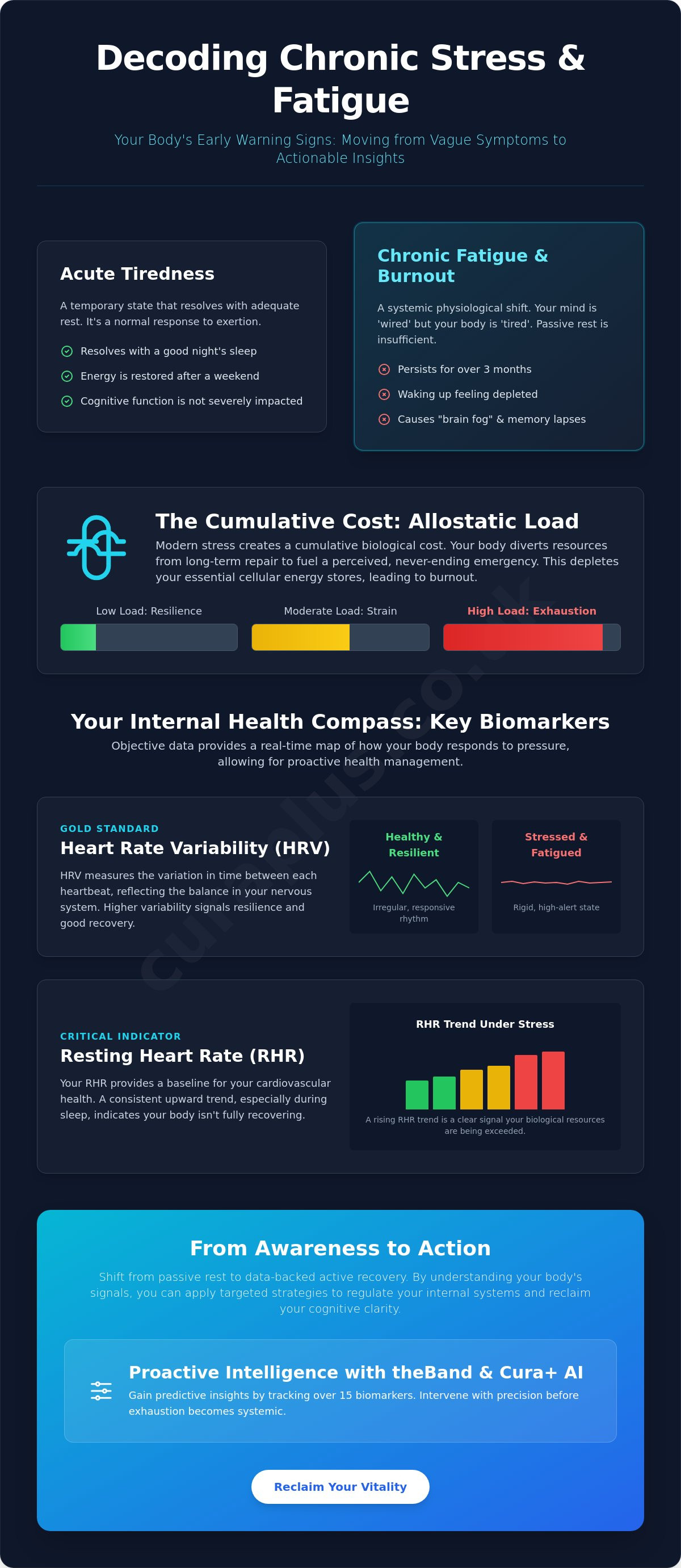
In 2026, the boundary between professional ambition and physiological depletion has become increasingly blurred. We often dismiss persistent exhaustion as a mere byproduct of a modern, fast-paced lifestyle. However, clinical definitions distinguish between acute tiredness, which resolves with rest, and the systemic failure of chronic fatigue. Amongst UK professionals, a pervasive "burnout culture" has shifted from a psychological talking point to a biological reality. Identifying the early signs of chronic stress and fatigue is the first step toward reclaiming your health before the damage becomes structural.
When your body identifies a state of chronic stress, it prioritises immediate survival over long-term cellular repair. This ancient survival mechanism, whilst effective for escaping predators, is disastrous when applied to a six-month project. The body diverts energy away from the immune system and cognitive centres to fuel a perceived emergency that never ends. What begins as mental pressure eventually manifests as physical systemic failure; your mitochondria begin to underperform as they prioritise the production of stress hormones over cellular energy.
The Interconnected Nature of Stress and Fatigue
Stress acts as the primary catalyst for energy depletion by initiating a relentless feedback loop. High cortisol levels, intended for short bursts of action, eventually disrupt your circadian rhythm and prevent deep, restorative sleep. This lack of recovery further elevates stress markers the following day. You might experience this as a physical "heaviness" in your limbs, where moving feels like wading through water. These are the physical signs of chronic stress and fatigue that indicate your nervous system is trapped in a state of high-alert exhaustion.
When "Normal" Tiredness Becomes a Chronic Concern
Distinguishing between a busy week and a systemic issue requires looking at the duration and depth of your symptoms. Clinical markers often point to a three-month threshold; if your depletion persists beyond this point, it's no longer simple tiredness. This state severely impacts cognitive function, leading to memory lapses and "brain fog" that a weekend of sleep cannot fix. Passive rest is insufficient when the underlying biological machinery is compromised. To move forward, you must establish a personalised baseline through data-driven tools like theBand and the Cura+ AI Platform, allowing you to monitor these deviations with clinical precision.
Physiological Indicators: The Subtle Biomarkers of Systemic Exhaustion
Subjective feelings of tiredness are often unreliable indicators of your true physiological state. To gain a precise understanding of your body's condition, you must look toward biomarkers, the objective language of your internal health. These measurable signals provide a real-time map of how your systems respond to external pressures. By monitoring these data points, you can detect the signs of chronic stress and fatigue long before they manifest as a total physical collapse. Recognising these shifts allows for a transition from reactive recovery to proactive health management.
Heart Rate Variability is the gold standard for measuring autonomic stress. Unlike a simple pulse reading, this metric tracks the millisecond-level variations between heartbeats, reflecting the balance between your sympathetic and parasympathetic nervous systems. When you are resilient, your heart rate is irregular and responsive. However, as the health risks of chronic stress accumulate, this variability decreases, signalling that your body is trapped in a rigid, high-alert state.
Heart Rate Variability: Your Internal Stress Compass
A declining HRV trend serves as a primary early warning of impending systemic fatigue. It indicates that the "rest and digest" branch of your nervous system is being overshadowed by the "fight or flight" response. If your HRV remains suppressed despite a full night of sleep, it suggests that your recovery capacity is compromised. Interpreting this data requires looking at multi-day trends rather than isolated readings. A consistent downward trajectory is a clear signal that your current load exceeds your biological resources, necessitating an immediate shift in your recovery strategy.
Resting Heart Rate and Respiratory Shifts
Your resting heart rate (RHR) provides another critical layer of insight into your physiological strain. A rising RHR over several consecutive days often precedes the onset of illness or burnout, acting as a proxy for systemic inflammation. Similarly, subtle changes in your respiratory rate whilst sleeping can indicate physiological overreach. If your breaths per minute increase during rest, your body is working harder to maintain homeostasis. Tracking these signs of chronic stress and fatigue through the Cura+ AI Platform ensures that these subtle shifts don't go unnoticed.
Beyond heart metrics, skin temperature and blood oxygenation (SpO2) offer vital clues about your recovery quality. Fluctuations in skin temperature often correlate with immune system suppression, whilst low SpO2 levels during sleep suggest that your cells aren't receiving the oxygen necessary for deep repair. Together, these biomarkers form a comprehensive picture of your internal resilience, allowing you to master your health through precise, data-driven observation.
The Allostatic Load: Why Modern Stress Becomes Chronic Fatigue
The body's ability to adapt is finite. Whilst short-term activation of the sympathetic nervous system is essential for performance, the cumulative cost of remaining in this state is known as allostatic load. This represents the biological "wear and tear" that occurs when your internal systems are forced to work overtime to maintain equilibrium. When this load exceeds your capacity for recovery, the body enters a state of allostatic overload. This is the precise point where the signs of chronic stress and fatigue transition from manageable pressure into systemic physiological exhaustion.
At the centre of this process is the HPA axis, the complex feedback loop between the hypothalamus, pituitary, and adrenal glands. This system regulates your response to challenge by modulating cortisol and adrenaline. However, chronic activation causes the HPA axis to lose its sensitivity. The result is a paradoxical state where you feel both "wired" due to lingering stress hormones and "tired" because your cellular energy stores are depleted. The "Fight or Flight" response, designed for brief emergencies, begins to drain your mitochondria, leaving you with insufficient ATP to power basic cognitive and physical functions.
Acute Stress vs. Chronic Allostatic Overload
It's vital to distinguish between eustress, which is beneficial short-term pressure, and the destructive strain of chronic overload. Acute stress is characterised by a rapid return to baseline once the challenge passes. In contrast, allostatic overload creates a permanent shift in your physiological baseline, making it increasingly difficult to reach a state of true rest.
| Metric | Acute Stress (Eustress) | Chronic Allostatic Overload |
|---|---|---|
| Recovery | Rapid return to baseline | Inability to recover after rest |
| Cognition | Heightened focus and alertness | Persistent brain fog and memory lapses |
| Immune Response | Temporary activation | Systemic inflammation and frequent illness |
| Energy State | Controlled energy expenditure | Profound cellular depletion |
The Impact on the Immune and Digestive Systems
The biological cost of chronic strain extends far beyond simple tiredness. As the body prioritises immediate survival, it diverts resources away from the immune and digestive systems. This often leads to frequent minor illnesses amongst the UK professional population, as the body's natural defences are compromised by sustained cortisol exposure. Furthermore, the "gut-brain axis" plays a decisive role in energy regulation. Chronic stress alters the gut microbiome and increases systemic inflammation, which directly contributes to the heavy, pervasive sensation of fatigue. By identifying these signs of chronic stress and fatigue early, you can intervene before this inflammatory cycle causes long-term damage to your metabolic health.
From Awareness to Action: Strategies for Managing Fatigue and Stress Signals
Moving from the recognition of symptoms to effective intervention requires a shift in perspective. Whilst generic health advice often suggests "more exercise" as a universal remedy, this can be counterproductive for those already exhibiting signs of chronic stress and fatigue. High-intensity training can actually exacerbate physiological depletion if your allostatic load is already at its peak. Instead, you must prioritise active recovery, which involves deliberate actions that stimulate the parasympathetic nervous system and support mitochondrial function. This transition from passive rest to precision recovery is the foundation of long-term resilience. Integrating non-invasive support, such as the vibrotactile technology from Sport Patch at sportpat.ch, can further aid this process by helping to regulate your nervous system.
Building Your Physiological Baseline
You cannot manage a system you haven't quantified. Establishing a personalised baseline is the only way to distinguish between daily fluctuations and genuine physiological decline. By identifying your unique "normal" for metrics such as resting heart rate and sleep architecture, you gain the ability to spot deviations before they manifest as illness. This proactive approach transforms health from a series of reactions to symptoms into a sophisticated strategy for self-optimisation. To begin this process, you should learn how to build a health baseline using high-fidelity data.
Micro-Habits for Stress Mitigation
Precision health is often the result of small, consistent actions that regulate your internal environment. Integrating micro-habits throughout your day can significantly lower your systemic strain. Consider the following strategies to support your nervous system:
- Box Breathing: Utilise a four-second inhale, hold, exhale, and hold pattern to trigger immediate parasympathetic activation.
- Ultradian Rhythm Alignment: Organise your workday into 90-minute focus blocks followed by 15-minute breaks to match your body's natural energy cycles.
- Strategic Sunlight: Aim for 10-20 minutes of direct morning sunlight to regulate your cortisol spike and anchor your circadian rhythm for better sleep.
Nutritional support also plays a decisive role in managing signs of chronic stress and fatigue. Favouring anti-inflammatory, nutrient-dense foods helps protect adrenal health and supports the HPA axis during periods of high demand. Magnesium, B vitamins, and omega-3 fatty acids are particularly essential for maintaining cellular energy production. When combined with rigorous sleep hygiene, such as maintaining a consistent cool temperature and eliminating blue light, these interventions allow your body to exit the "wired but tired" loop. To move beyond general advice and start making data-driven decisions, you can optimise your recovery with the Cura+ AI Platform.
Proactive Intelligence: How theBand by Cura+ Identifies the Signs Early
Mastering your health requires more than intent; it demands high-fidelity data. Whilst traditional wellness tools often rely on subjective self-reporting, theBand by Cura+ represents a paradigm shift toward objective, predictive intelligence. This multi-sensor wearable is engineered to detect the subtle signs of chronic stress and fatigue before they manifest as a physical or cognitive crisis. By transitioning from reactive management to proactive physiological mastery, you can protect your long-term vitality with clinical precision.
The power of theBand lies in its ability to track over 15 distinct biomarkers simultaneously. This comprehensive data set provides a clear window into your current allostatic load, measuring the cumulative impact of your environment on your internal systems. When paired with the Cura+ AI Platform, raw biological signals are transformed into a sophisticated wellness strategy. This isn't merely data for the sake of observation; it is a high-level consultancy for your body that provides the clarity needed to make informed decisions about your recovery and performance.
Predictive Alerts: Catching Burnout Before it Happens
Burnout does not occur overnight. It is the result of a sustained downward trend in your physiological resilience. theBand identifies these shifts by monitoring millisecond-level changes in Heart Rate Variability and nocturnal skin temperature fluctuations. If your recovery markers fail to return to your established baseline, the system provides real-time notifications. These alerts serve as an early warning system, allowing you to adjust your workload or prioritise active recovery before exhaustion becomes systemic. For those seeking this level of insight, theBand is the premier predictive health wearable UK professionals trust to maintain their competitive edge.
Personalised Insights for the Modern British Lifestyle
Generic health recommendations often fail because they ignore your unique biological context. theBand moves beyond simple step counts to deliver deep biological intelligence tailored to your specific needs. By analysing your signs of chronic stress and fatigue in the context of your daily habits, the Cura+ AI Platform offers personalised recovery protocols. Whether it's adjusting your sleep hygiene or timing your most demanding tasks to match your peak energy states, every recommendation is backed by your own data. This level of refinement ensures that you aren't just managing symptoms, but actively optimising your human system for high-level performance and sustained excellence.
Master Your Biology for Sustained Performance
The journey toward physiological mastery begins with the decision to look beneath the surface of your symptoms. We've established that the signs of chronic stress and fatigue are objective biological signals, not merely psychological burdens. By understanding the cumulative nature of allostatic load and the precision of biomarker tracking, you can move from a state of reactive recovery to one of proactive health management. You now have the intellectual framework to identify these shifts before they compromise your long-term performance.
theBand by Cura+ serves as your sophisticated partner in this process. It monitors over 15 essential biomarkers to provide a comprehensive view of your internal health, whilst AI-driven predictive health alerts ensure you're always one step ahead of burnout. This system is designed for sophisticated health optimisation, allowing you to reclaim your clarity and energy with absolute confidence. Take the first step toward a more resilient and empowered future today. Discover the future of proactive health with theBand by Cura+. Your potential is waiting to be unlocked.
Frequently Asked Questions
What are the first physical signs of chronic stress?
The earliest physical signals of chronic strain often manifest as subtle shifts in your autonomic nervous system. You might notice persistent tension in your jaw or shoulders, alongside digestive irregularities and a heightened startle response. These signals indicate that your body is prioritising immediate survival over routine maintenance. Identifying these signs of chronic stress and fatigue early allows you to intervene before the physiological load becomes unsustainable.
How can I tell the difference between being tired and having chronic fatigue?
The primary distinction lies in the restorative power of rest. Normal tiredness typically resolves after a period of quality sleep or a relaxing weekend. In contrast, chronic fatigue persists regardless of rest duration and is often accompanied by cognitive impairment or "brain fog." If your exhaustion remains unchanged for more than three consecutive months, it suggests a deeper systemic depletion rather than simple acute tiredness.
Can chronic stress cause long-term damage to the body?
Sustained chronic stress can lead to structural and functional changes across multiple body systems. Prolonged cortisol exposure can suppress immune function, increase systemic inflammation, and disrupt the HPA axis. Over time, this allostatic load contributes to metabolic shifts and cardiovascular strain. Proactive monitoring is essential to detect these physiological deviations before they result in permanent biological wear and tear.
Why do I feel exhausted even after sleeping for eight hours?
Exhaustion following adequate sleep often indicates poor sleep architecture or a disrupted circadian rhythm. Whilst you may be unconscious for eight hours, your body might not be entering the deep, restorative stages of sleep necessary for cellular repair. This is frequently caused by elevated nocturnal cortisol levels, which keep your nervous system in a state of high alert, preventing the transition into a true parasympathetic recovery phase.
Is it possible to measure my stress levels at home?
Measuring stress levels at home is now possible through the high-precision tracking of autonomic biomarkers. By monitoring Heart Rate Variability and resting heart rate, you can gain an objective view of your internal state. Tools like theBand provide the clinical accuracy required to observe these trends. This data-driven approach removes the guesswork, allowing you to see how your body responds to daily pressures in real time.
How does theBand by Cura+ help with managing fatigue?
theBand by Cura+ assists in fatigue management by providing predictive intelligence through the tracking of over 15 essential biomarkers. It identifies subtle downward trends in your physiological resilience before you feel the full impact of exhaustion. Through the Cura+ AI Platform, you receive personalised recovery recommendations and alerts. This ensures that you can adjust your load and prioritise active recovery with precision and confidence.
What is the quickest way to lower my allostatic load?
Reducing your allostatic load quickly requires deliberate activation of the parasympathetic nervous system. Techniques such as box breathing provide immediate relief by signalling safety to the brain. Additionally, aligning your activity with your natural ultradian rhythms prevents the over-extension of your biological resources. Whilst these micro-habits offer rapid shifts, long-term reduction depends on consistent, data-backed recovery strategies that support your body's internal equilibrium.
When should I see a doctor about my stress and fatigue?
You should consider consulting a healthcare professional if your symptoms are persistent, severe, or significantly impact your quality of life. Whilst monitoring your signs of chronic stress and fatigue with data provides valuable insight, it's important to seek professional advice if lifestyle interventions fail to improve your energy levels. A medical practitioner can help rule out underlying conditions that may mimic physiological exhaustion.


