


What if your body could send you a digital notification forty-eight hours before the first cough or shiver actually begins? Most of us wait for a fever or a sore throat to signal that something is wrong, yet these are often the final stages of a biological battle that started days earlier. Understanding what your body tells you before you get sick is no longer a matter of guesswork or vague intuition. It's frustrating to miss a key presentation or a family dinner because you didn't recognise the signs until it was too late. You've likely felt that subtle, "off" sensation whilst trying to push through a busy morning, only to find yourself bedridden by the evening.
This article explores the science of predictive health, revealing how subtle physiological whispers can be captured through advanced data. You'll discover how to identify specific biomarkers that signal impending illness and learn to build a personal health baseline that helps you optimise your approach to wellness. We'll examine the transition from reactive care to a proactive strategy where you're always one step ahead. By mastering the interpretation of these biological signals, you can replace uncertainty with clinical clarity and reclaim control over your schedule.
Key Takeaways
- Identify the pre-symptomatic window where your immune system is active but symptoms are absent, allowing for strategic intervention before a physical decline.
- Recognise Heart Rate Variability (HRV) and Resting Heart Rate (RHR) as high-fidelity indicators of cardiovascular strain and systemic recovery.
- Analyse subtle cognitive load shifts and sleep architecture changes that serve as early indicators of a compromised internal state.
- Understand how the Cura+ AI Platform synthesises complex physiological data to reveal exactly what your body tells you before you get sick.
- Execute an "immediate pivot" in your schedule and nutrition to support your body's natural defences during the critical "whisper" phase.
Understanding the Pre-Symptomatic Window: The Body’s Early Warning System
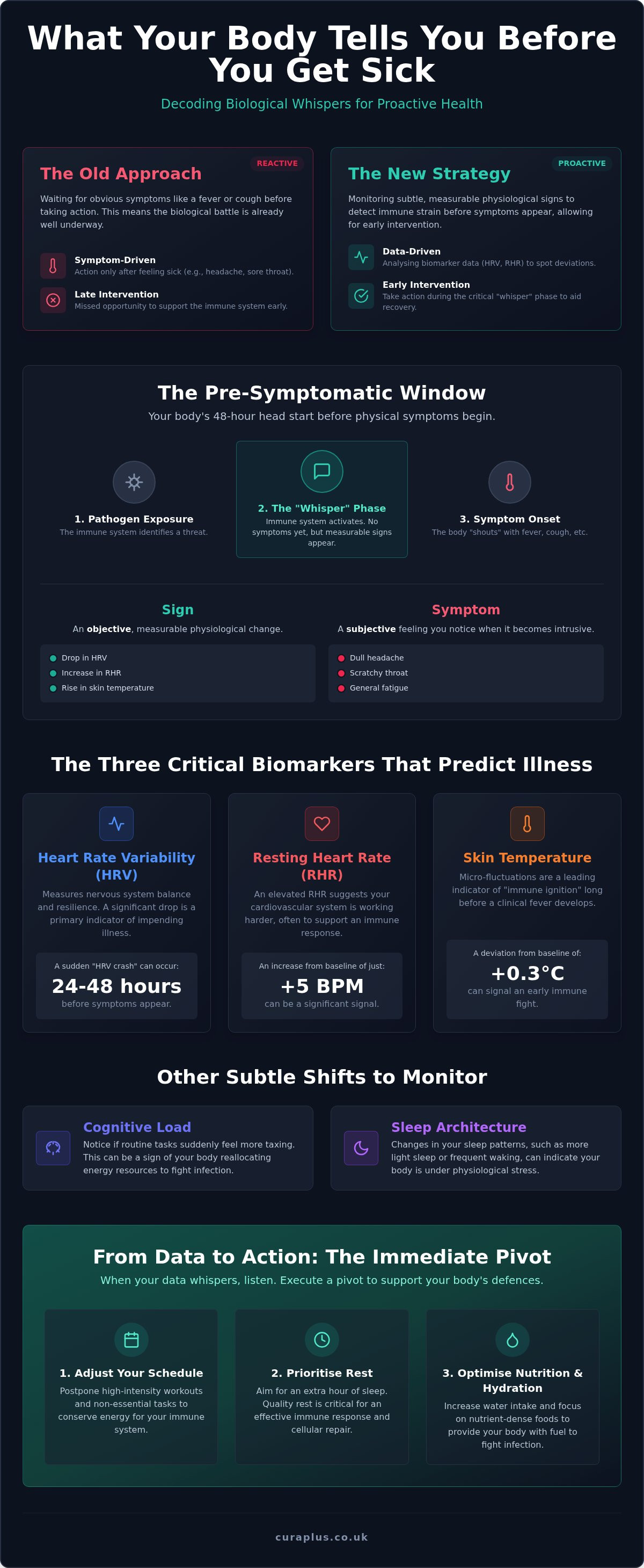
Illness does not arrive with a sudden crash; it begins with a series of quiet, internal adjustments as your immune system identifies a pathogen and mobilises its first line of defence. This period is known as the pre-symptomatic window. During this phase, your body is working at a high capacity, yet you might feel physically capable of performing your daily routine. Understanding what your body tells you before you get sick requires a fundamental shift in perspective from subjective feeling to objective measurement.
There is a critical distinction between a "sign" and a "symptom." A symptom is a subjective experience, such as a dull headache or a scratchy throat, that you only notice once it becomes intrusive. In contrast, a sign is a measurable physiological change. By the time you feel a symptom, the biological battle is already well underway. Human intuition is notoriously poor at detecting these early shifts because our brains are naturally wired to ignore background noise. We rely on "biological whispers," which are the minute fluctuations in our baseline data, to understand the true state of our health before the system reaches a breaking point.
The Science of Incubation and Immune Response
During the incubation period, your autonomic nervous system (ANS) acts as the body's early warning system. Long before you perceive a threat, the ANS begins reallocating resources to prepare for a defensive response. This process carries a significant metabolic cost. Even if you aren't coughing, your body is burning extra energy to fuel early-stage immune activation. This is why that vague sense of "feeling off" is actually a sophisticated data point. It is your internal sensors reporting a spike in resource demand and a shift in systemic priorities. Recognising these signals early allows for intervention before the illness manifests as physical suffering.
Moving from Reactive to Proactive Health Management
Traditional healthcare is largely reactive. Most people wait for a scheduled check-up or a debilitating symptom before they seek answers. These snapshots in time are limited because they fail to capture the dynamic fluctuations of daily life. Utilising proactive health management tools allows for the continuous monitoring of over 15 biomarkers via theBand. This transition replaces health anxiety with data-driven clarity. Instead of wondering why tasks suddenly feel more taxing, you can see the evidence of immune strain through the Cura+ AI Platform. It moves the conversation from managing a crisis to mastering a complex system.
The Three Critical Biomarkers That Predict Illness
Predictive health relies on moving beyond general feelings to specific, high-fidelity data. When we examine what your body tells you before you get sick, we focus on three primary physiological pillars: Heart Rate Variability (HRV), Resting Heart Rate (RHR), and Skin Temperature. These metrics serve as the first responders of your biology. Whilst they may seem like isolated numbers, their interaction provides a comprehensive map of your immune system's current state. Stability in these markers suggests resilience; volatility often signals an impending challenge.
Heart Rate Variability: The Nervous System’s Secret Language
HRV measures the variation in time between consecutive heartbeats. It is the gold standard for assessing the balance of your autonomic nervous system. A high HRV signifies a resilient, recovered state where your body is ready to handle stress. Conversely, a significant drop in HRV often occurs 24 to 48 hours before a fever or cough manifests. This "HRV crash" indicates that your parasympathetic nervous system is withdrawing as the body prepares for a high-intensity immune event. Using a device to measure HRV daily allows you to establish a precise baseline, making these sudden deviations easy to spot. It's the difference between being blindsided by a virus and receiving a two-day head start.
Skin Temperature and Resting Heart Rate
Whilst a standard thermometer only registers a fever once it has taken hold, micro-fluctuations in skin temperature act as a leading indicator of immune "ignition." A shift as small as 0.3°C from your personal baseline can signal that your body is beginning to fight an infection. This often occurs in tandem with an elevated Resting Heart Rate. When your RHR climbs by even five beats per minute whilst you are at rest, it suggests your cardiovascular system is working harder to maintain homeostasis under threat. The pump is accelerating to transport immune cells and nutrients to where they are needed most.
Respiratory rate stability is equally vital. A sudden increase in breaths per minute, even if subtle, is frequently linked to the early stages of respiratory infections. By tracking these metrics simultaneously, you move from guessing why you feel tired to knowing your body is under strain. Monitoring these biomarkers through theBand provides the clarity needed to intervene early, allowing you to prioritise recovery before the symptoms demand it. This multi-layered approach ensures that no single data point is taken out of context, providing a rigorous and reliable predictive model.
Subtle Behavioural and Cognitive Shifts You Shouldn’t Ignore
Physiological biomarkers provide the raw data of immune activation, yet your brain often translates these signals into behavioural shifts before you consciously feel ill. These changes are frequently dismissed as a "bad day" or a temporary lack of focus. However, understanding what your body tells you before you get sick involves recognising these cognitive and emotional nuances as early-stage warning signs. This phenomenon is rooted in "Sickness Behaviour," a sophisticated evolutionary strategy where the brain reallocates energy from social and professional pursuits toward the internal healing process.
When your immune system identifies a threat, it releases cytokines that communicate directly with the central nervous system. This interaction triggers a shift in priorities. You may find yourself withdrawing from social interactions or losing interest in your favourite hobbies. This is not a lack of discipline. It is a biological mandate to conserve metabolic resources. By identifying these patterns early, you can adjust your expectations and workload before a full-blown symptoms manifest.
Sleep as a Predictive Mirror
Your sleep architecture is one of the most sensitive indicators of impending illness. During the pre-symptomatic window, you may notice a spike in your "restlessness index," characterised by frequent micro-awakenings that you might not even remember the next morning. Utilising a wearable for tracking sleep stages reveals these hidden disruptions in REM and Deep Sleep cycles.
- REM Alterations: A sudden decrease in REM sleep can signal that the brain is prioritising physical recovery over cognitive processing.
- Deep Sleep Spikes: Conversely, an unusual increase in Deep Sleep duration often precedes a viral event as the body attempts to accelerate cellular repair.
- Awake Time: Increased time spent awake during the night suggests a state of physiological hyper-arousal, often linked to rising internal temperatures.
Mood, Motivation, and Micro-Fatigue
Cognitive load shifts are equally telling. Tasks that usually feel effortless, such as organising your weekly schedule or responding to emails, may suddenly feel insurmountably taxing. This "brain fog" is often accompanied by increased irritability or a sudden dip in motivation. It is essential to distinguish this from general laziness. Pre-symptomatic fatigue is a systemic response to the energy-intensive nature of early immune mobilisation.
Learning to build a health baseline allows you to identify when your current mood or energy levels deviate from your norm. When you recognise that your irritability is a data point rather than a personality flaw, you gain the clarity needed to pivot. Instead of pushing through the fatigue, you can choose to rest, potentially shortening the duration of the coming illness or avoiding it altogether.
The Role of AI in Translating Biological Data into Intelligence
Humans are naturally adept at noticing singular, dramatic events like a sharp pain or a high fever. However, we are biologically ill-equipped to track multi-dimensional trends over extended periods. A single night of restless sleep or a marginal rise in heart rate might seem insignificant in isolation. When these metrics are viewed as an integrated system, they reveal the true narrative of what your body tells you before you get sick. AI serves as the essential bridge between raw biological noise and actionable intelligence, identifying patterns that remain invisible to the naked eye.
The complexity of the human body means that a "normal" range is a statistical abstraction rather than a personal reality. Your "sick" data might look identical to another person's "healthy" baseline. This is why static thresholds often fail. AI algorithms synthesise vast amounts of information to create a personalised signature of your wellness, ensuring you never miss what your body tells you before you get sick. This shift from reactive medicine to predictive intelligence allows for a more nuanced understanding of internal strain.
The Power of 15+ Biomarkers
Most consumer wearables focus on surface-level metrics like step counts. Whilst these are useful for general activity tracking, they offer little value for illness prediction. True "Physiological Intelligence" requires a more holistic view of the body's internal state. theBand by Cura+ monitors over 15 biomarkers simultaneously, including oxygen saturation and skin conductance. By tracking these diverse data points, the system identifies the subtle correlations that precede a physical decline. For instance, a simultaneous drop in oxygen saturation and a rise in skin conductance might signal an immune response long before you feel a single ache or shiver.
Predictive Alerts: A New Form of Intuition
The real innovation lies in how this data is communicated back to you. The Cura+ AI Platform learns your unique physiological signature over time, identifying what is normal for your specific biology. When your metrics deviate from this norm, the system provides a predictive alert. This represents the intelligent future of your AI health and wellness coach. It doesn't just present a confusing graph; it translates complex data into "Ready/Not Ready" scores for your daily life.
We are entering an era of continuous, passive monitoring where your health data works in the background whilst you live your life. The future of personal health relies on these systems to provide clarity where there was once only uncertainty. To take the first step toward mastering your body's signals, explore the Cura+ ecosystem and discover the power of predictive intelligence.
Taking Action: How to Respond to Your Body’s Predictive Signals
Understanding what your body tells you before you get sick is a significant advantage, but the true value of predictive intelligence lies in the response. When the Cura+ AI Platform identifies a deviation from your baseline, it triggers the "Immediate Pivot." This is a strategic window, often 24 to 48 hours before physical symptoms emerge, where targeted interventions can either mitigate the severity of the illness or, in some cases, prevent its full onset. Instead of waiting for a fever to force you into bed, you take command of the situation whilst you are still functionally healthy.
The pivot involves an immediate reduction in both physical and cognitive strain. If your data shows a sudden drop in HRV or a rise in skin temperature, cancel high-intensity training and postpone cognitively demanding tasks. Support your immune system during this "whisper" phase by increasing hydration and prioritising anti-inflammatory nutrition. Focus on electrolyte-rich fluids and high-quality proteins to provide the raw materials your body needs for its defence. If these biomarkers continue to deteriorate or if you experience severe pain, it is essential to move from self-monitoring to seeking professional clinical advice.
The Proactive Protocol
Effective rest is not just about staying in bed; it is about active recovery management. By utilising immune health tracking, you can monitor how your body responds to these early interventions. You aren't just guessing if the extra sleep is working; you can see the data-driven evidence of your autonomic nervous system returning to balance. This protocol shortens the duration of seasonal illnesses by ensuring your body isn't fighting a pathogen whilst simultaneously struggling with external stressors. Knowing when to return to your normal routine is equally critical. Use the process of tracking recovery to ensure your biomarkers have stabilised before you resume full physical or professional activity.
Building Your Predictive Toolkit
To master this proactive approach, you need a system that offers more than just basic metrics. theBand is designed as the ultimate advanced wellness tracker for the modern Briton, providing a high-fidelity stream of data that the Cura+ AI Platform translates into clear, actionable guidance. Integrating this technology into your daily routine transforms your relationship with your health. You no longer need to wonder what your body tells you before you get sick because you have a sophisticated digital partner providing clinical clarity. Listening to your body is no longer a matter of vague intuition; it has become a precise data science that empowers you to live with confidence and control.
Master Your Biological Narrative
The transition from reactive symptom management to proactive health mastery is no longer a futuristic concept; it is a current reality powered by physiological intelligence. By identifying the subtle fluctuations in your pre-symptomatic window, you reclaim the time and energy often lost to sudden illness. You've learned that monitoring biomarkers like HRV and skin temperature, alongside tracking cognitive shifts, provides a comprehensive view of your internal state. Understanding exactly what your body tells you before you get sick allows you to intervene with precision, replacing guesswork with data-driven clarity.
True wellness is a complex system to be understood rather than a series of problems to be solved. With the right tools, you can transform these biological whispers into a clear roadmap for daily performance. Discover the future of proactive health with theBand by Cura+. Designed and engineered in the UK, theBand monitors over 15 essential biomarkers simultaneously, providing AI-driven predictive health alerts that keep you one step ahead of your biology. Your journey toward self-optimisation begins with the decision to listen to the data your body is already providing. Embrace the clarity of predictive health and live with the confidence of knowing you are always in control.
Frequently Asked Questions
Can a wearable really predict a cold before I feel it?
Yes, advanced wearables detect physiological shifts before you perceive any physical symptoms. By monitoring biomarkers like Heart Rate Variability and skin temperature, devices like theBand identify immune activation during the incubation period. This allows you to understand what your body tells you before you get sick, providing a critical window for early intervention and strategic rest.
What is the most important biomarker for predicting illness?
Heart Rate Variability (HRV) is the most critical biomarker for predicting systemic strain. It serves as a direct window into the balance of your autonomic nervous system. A significant deviation from your personal HRV baseline often signals that your body is reallocating resources to fight an impending infection, even whilst you still feel physically capable of your daily routine.
How much does my heart rate variability (HRV) change when I am getting sick?
A significant drop, often exceeding 20% below your rolling seven-day average, is a common indicator of immune stress. Whilst individual variance exists, these "HRV crashes" are typically accompanied by a rise in resting heart rate. Tracking these specific percentage shifts helps you move from vague intuition to a more rigorous, data-driven approach to personal health management.
Does a slightly higher skin temperature always mean I am coming down with something?
Not necessarily, as skin temperature can fluctuate due to room environment, alcohol consumption, or intense exercise. However, a sustained increase of 0.3°C or more above your baseline is a strong predictor of immune ignition when paired with a lower HRV. The Cura+ AI Platform contextualises temperature shifts amongst 15 other biomarkers to ensure high-fidelity accuracy.
How long is the pre-symptomatic window for most common viruses?
The pre-symptomatic window typically lasts between 24 and 72 hours for most common respiratory viruses. This is the period where the immune system is active but physical symptoms haven't yet manifested. Recognising what your body tells you before you get sick during this timeframe is essential for implementing a proactive protocol that can potentially shorten illness duration.
Should I stop exercising if my health wearable gives me a predictive alert?
You should significantly reduce your training intensity or opt for complete rest when a predictive alert is triggered. High-intensity exercise places additional metabolic stress on a system that is already mobilising for defence. Pivoting to light movement or rest allows your internal resources to focus entirely on immune support rather than muscle repair and recovery.
Can stress mimic the early signs of getting sick on a health tracker?
Acute psychological stress can cause similar drops in HRV, but it rarely triggers the same patterns in skin temperature or oxygen saturation seen during illness. AI-driven platforms are designed to distinguish between these states by synthesising multiple data points simultaneously. This multi-biomarker approach ensures that temporary lifestyle stress isn't confused with a genuine viral threat to your system.
How do I know if my data baseline is accurate?
A reliable baseline is established through consistent, long-term monitoring, usually requiring 14 to 30 days of continuous wear. This period allows the Cura+ AI Platform to understand your unique physiological ranges across various activities and sleep cycles. Accuracy is maintained by wearing theBand consistently, ensuring the system has the high-fidelity data needed to detect even minute deviations.


