


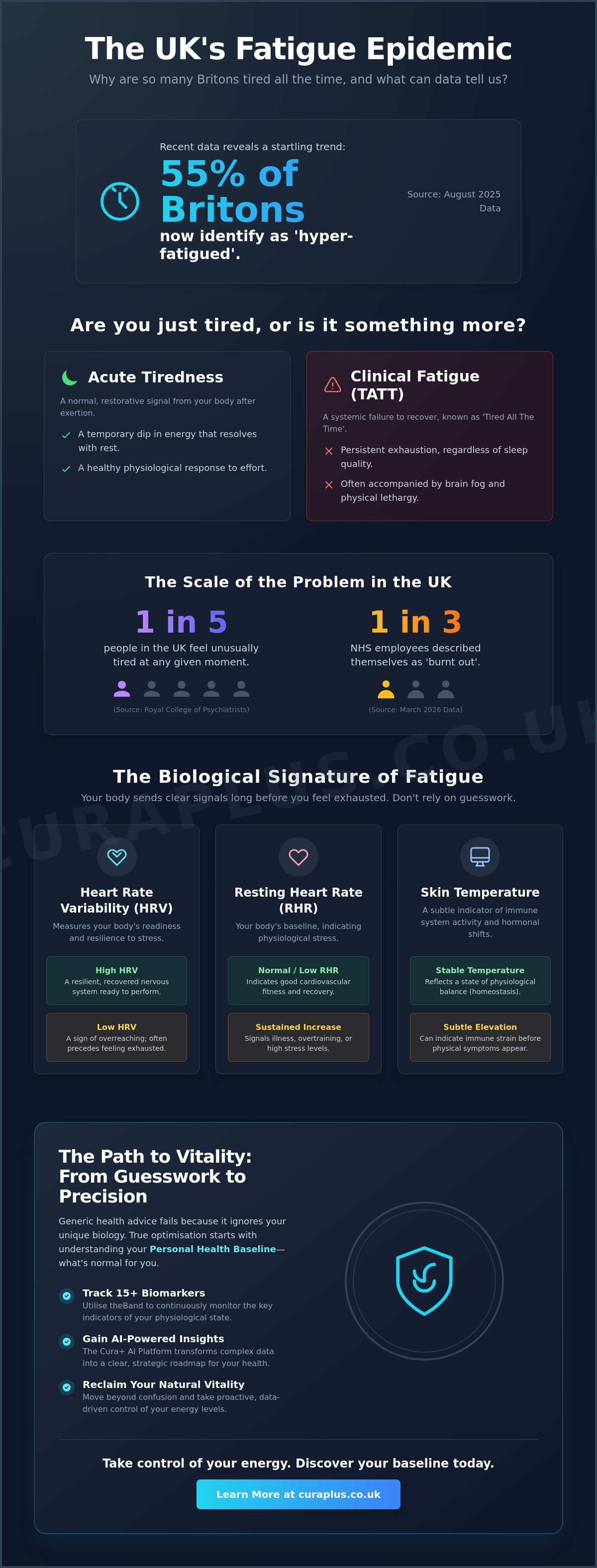
Recent data from August 2025 reveals that 55% of Britons now identify as hyper-fatigued. If you've found yourself asking why am I so tired all the time UK, you're likely grappling with persistent brain fog and a frustrating inability to sustain energy through your workday. It's easy to accept this state as a normal consequence of a demanding schedule, but such profound exhaustion often signals a measurable physiological trend rather than a simple lack of rest.
You deserve to move beyond the confusion of clinical fatigue and reclaim your sense of control. This article explores the biological drivers behind your tiredness and demonstrates how data-driven baseline monitoring can provide the clarity you've been missing. We'll examine how theBand and the Cura+ AI Platform allow you to measure energy levels objectively, offering a sophisticated path toward self-optimisation. By the end of this guide, you'll have a clear understanding of your body's complex systems and the actionable steps required to restore your vitality.
Key Takeaways
- Distinguish between acute tiredness and the clinical TATT (Tired All The Time) framework to accurately categorise the severity of your exhaustion.
- Recognise the biological signature of fatigue by monitoring critical physiological indicators such as Heart Rate Variability (HRV) and systemic readiness.
- Evaluate whether lifestyle factors or deeper physiological trends are the reason why am I so tired all the time UK through continuous, objective measurement.
- Prioritise your unique Personal Health Baseline over generic population averages to understand what "normal" truly means for your specific biology.
- Utilise theBand and the Cura+ AI Platform to track 15+ biomarkers, transforming complex data into a strategic roadmap for reclaiming your natural vitality.
Defining 'Tired All The Time' (TATT) in the Modern UK Context
In British clinical practice, the acronym TATT (Tired All The Time) has transitioned from a shorthand note in GP surgeries to a widespread societal condition. Data from the Royal College of Psychiatrists indicates that at any given moment, one in five people in the UK feel unusually tired. This state is distinct from the temporary exhaustion following a long day. To understand what is fatigue?, we must differentiate between acute tiredness, which is a restorative physiological signal, and chronic fatigue, which persists regardless of rest or sleep quality. Whilst acute tiredness is a temporary dip in energy, clinical fatigue represents a systemic failure to recover.
The traditional British "stiff upper lip" culture often complicates this issue. Many individuals dismiss persistent brain fog or physical lethargy as a personal failing or an inevitable part of a busy life. This cultural tendency to push through often leads to a delayed diagnosis, as people wait until they're completely incapacitated before seeking answers to the question, why am I so tired all the time UK. We must reframe our perspective. Energy isn't simply a resource to be spent until it's gone; it's a complex biological system that requires precise optimisation and proactive management.
The Economic and Personal Cost of Fatigue
The impact of widespread exhaustion extends far beyond individual discomfort. It carries a heavy economic burden through diminished workplace productivity and increased absenteeism. As of March 2026, nearly one in three NHS employees described themselves as burnt out, reflecting a broader trend across the UK workforce. On a personal level, persistent lethargy erodes the quality of family life and social interactions, leaving individuals too depleted to engage with what matters most. Physiologically, this isn't just a mood. It's a critical signal from your autonomic nervous system that your body's demands are consistently outstripping its capacity to regenerate.
Why Subjective Feelings Often Mislead Us
Human beings are notoriously poor judges of their own physiological states. We often rely on subjective feelings to gauge our health, but these are easily distorted by external factors. The frequent use of caffeine and other stimulants in the UK masks true physiological exhaustion, creating a temporary veneer of alertness whilst the underlying biological systems remain in deficit. This reliance on "feeling" is why so many people struggle to identify why am I so tired all the time UK. To achieve true vitality, we must move away from guesswork. Objective, data-driven health monitoring is the only way to replace subjective uncertainty with the clinical clarity required to master your own biology.
The Biological Signature of Fatigue: What Your Body is Telling You
Fatigue leaves a distinct biological trail that subjective feelings often fail to capture. Whilst many individuals search for common causes of tiredness, the most accurate answers often lie within the subtle fluctuations of your own biomarkers. Heart Rate Variability (HRV) serves as a primary indicator of your body's readiness to perform. A high HRV suggests a resilient, recovered system, whilst a downward trend often precedes the conscious sensation of exhaustion. Similarly, your Resting Heart Rate (RHR) acts as a sentinel. A sustained increase in RHR typically signals that your body is overreaching or fighting an incipient illness, even if you feel externally fine.
Monitoring skin temperature provides another layer of clinical insight. Subtle elevations can indicate immune system strain or hormonal shifts long before physical symptoms manifest. By identifying these physiological shifts early, you can adjust your behaviour to prevent a minor dip in energy from becoming a chronic state of fatigue. This is why understanding your biological signature is essential for anyone asking why am I so tired all the time UK. Transitioning from guesswork to measurement is the first step in reclaiming your vitality.
The Autonomic Nervous System and Energy Regulation
Your energy levels are dictated by the delicate balance between the sympathetic (fight or flight) and parasympathetic (rest and digest) branches of your nervous system. Chronic modern stress often traps the body in a sympathetic-dominant state, leading to what we define as nervous system burnout. This state drains your internal battery faster than it can recharge. Biomarker tracking allows you to visualise this internal tension, providing the data needed to shift back into a restorative parasympathetic state before you hit a wall.
Sleep Architecture: Quality vs. Quantity
Time spent in bed does not always equate to physiological recovery. Sleep architecture, the structural balance between REM and Deep Sleep, is the true driver of cognitive and physical restoration. Deep sleep facilitates physical repair, whilst REM sleep is critical for processing emotions and clearing brain fog. Alcohol and late-night blue light exposure are notorious for fragmenting these cycles, leaving you feeling depleted despite "sleeping" for eight hours. To truly master your energy, you must move beyond the clock and look at the data. Using advanced tools like theBand by Cura+ allows you to see exactly how your lifestyle choices influence these critical sleep stages, turning the mystery of exhaustion into a manageable system.
Common Fatigue Causes UK: Lifestyle vs. Clinical Factors
Deciphering whether your exhaustion stems from a demanding schedule or an underlying medical condition is a critical step in reclaiming your health. Many individuals asking why am I so tired all the time UK find themselves caught between these two possibilities. Whilst lifestyle choices are often the primary drivers, several clinical conditions are prevalent across the British population. Iron-deficiency anaemia, thyroid dysfunction, and sleep apnoea are frequent medical causes that require professional attention. Reviewing common causes of tiredness and fatigue can help you identify if your symptoms align with these clinical red flags.
Your GP is better equipped to help when you provide objective evidence. Instead of describing a vague sense of lethargy, presenting a clear record of biomarker fluctuations can accelerate the diagnostic process. This data-driven approach bridges the gap between subjective feeling and clinical insight for those wondering why am I so tired all the time UK. However, for many, the root cause lies in the intersection of sedentary behaviour and the modern British diet. High consumption of ultra-processed foods and lack of movement create a metabolic environment where energy production is consistently compromised.
Nutritional Gaps and Metabolic Health
Specific nutritional deficiencies are particularly prevalent in the UK. Vitamin D deficiency affects 1 in 5 adults in the UK, directly impacting energy levels and immune function. Beyond vitamins, metabolic health plays a decisive role. Consuming refined carbohydrates leads to rapid blood sugar spikes followed by inevitable crashes, often manifesting as the dreaded afternoon slump. Maintaining consistent hydration is equally vital. Even mild dehydration can impair cognitive endurance, making tasks feel significantly more taxing than they should be.
Psychological Drivers: Stress, Anxiety, and Burnout
Mental and physical energy are inextricably linked. The "always-on" work culture prevalent in the UK places a constant demand on our emotional labour, which drains physical reserves just as effectively as intense exercise. Chronic stress isn't merely a psychological state; it's a physiological burden. It triggers a sustained release of cortisol that, over time, disrupts your natural energy cycles. By tracking your biological response to stress, you can identify when emotional pressure is beginning to manifest as physical burnout, allowing for intervention before the system fails.
Establishing Your Physiological Baseline to Manage Energy
Most individuals approach fatigue reactively, waiting until they're incapacitated before seeking professional advice. This approach is inherently flawed because it ignores the subtle, pre-symptomatic shifts that occur within your biology. Establishing a Personal Health Baseline is the only way to move from managing symptoms to mastering your internal systems. Whilst population averages provide a broad guide, your unique "normal" is the only metric that matters when investigating why am I so tired all the time UK. Continuous, 24/7 monitoring allows you to capture the nuances of your circadian rhythms, identifying specific "energy leaks" where lifestyle choices inadvertently drain your biological battery.
By shifting your focus to long-term trends rather than daily snapshots, you gain the ability to predict dips in vitality before they manifest as brain fog or lethargy. This proactive stance transforms health from a series of mysteries into a manageable data set. When you understand your baseline, you can distinguish between a temporary need for rest and a systemic trend that requires intervention. This clarity is the ultimate tool for anyone seeking to optimise their performance and reclaim their natural energy levels.
The 5-Step Process to Building a Baseline
Creating a reliable physiological profile requires a methodical approach to data collection and analysis. Follow this structured process to gain clinical-grade insight into your energy cycles:
- Step 1: Engage in continuous multi-sensor data collection over a 14-day period to establish a statistically significant data set.
- Step 2: Analyse the data to identify your optimal sleep and activity windows, aligning your schedule with your natural biological clock.
- Step 3: Correlate your subjective feelings of tiredness with objective biomarkers to see which habits actually drive your exhaustion.
- Step 4: Recognise subtle deviations from your norm that signal early viral onset, high-level stress, or metabolic strain.
- Step 5: Adjust your daily habits based on real-time feedback, ensuring your lifestyle supports rather than hinders your recovery.
Using Data to Communicate with Healthcare Professionals
When you visit a GP, the quality of information you provide determines the quality of care you receive. Presenting long-term trends allows your doctor to see the full picture of your health rather than a single, potentially misleading snapshot. Showing clear deviations from your established baseline provides powerful clinical evidence that something has shifted within your system. Understanding how to build a health baseline serves as the foundation for energy management, providing the necessary context to solve the puzzle of why am I so tired all the time UK. Explore the Cura+ AI Platform to begin your journey toward data-driven vitality today.
Proactive Vitality: How theBand by Cura+ Transforms Energy Management
Traditional approaches to exhaustion often fail because they're fundamentally reactive. By the time you're asking why am I so tired all the time UK, your biological systems are likely already in a state of significant deficit. theBand by Cura+ shifts this paradigm by providing a continuous, high-fidelity window into your internal environment. It monitors 15+ biomarkers, including HRV, skin temperature, and sleep architecture, to identify the root cause of your fatigue before it becomes debilitating. This isn't merely a tracker. It's a strategic partner in your journey toward self-optimisation and long-term longevity.
The Cura+ AI Platform serves as the analytical engine for this data, moving beyond simple reporting to deliver predictive insights. It identifies subtle patterns that escape human notice, such as a creeping increase in resting heart rate or a decline in deep sleep quality. This capability allows you to intervene early, adjusting your recovery protocols before burnout takes hold. By treating your health as a complex system to be mastered, you replace the uncertainty of fatigue with the clarity of data-driven insight. You no longer have to guess why your energy is flagging; you have the evidence required to fix it.
AI-Driven Health Coaching for Daily Energy
Data is only valuable if it leads to meaningful action. Your AI health and wellness coach translates complex biological signals into clear, personalised recommendations for your daily life. If your HRV drops or your systemic readiness fluctuates, the platform provides real-time alerts to prompt recovery. These prompts might include specific adjustments to your evening routine or a suggestion to prioritise rest over high-intensity activity. This level of precision ensures you're always operating within your body's current capacity, preventing the cumulative strain that leads to chronic tiredness.
The Future of Proactive Wellness in 2026
The shift toward a predictive health wearable UK market represents a fundamental change in how we manage our vitality. We're moving away from a model of reactive care and toward one of informed empowerment. Knowing your own body at a biomarker level eliminates the frustration of asking why am I so tired all the time UK. It replaces guesswork with a methodical, scientific process for maintaining peak performance. You have the opportunity to take control of your biological narrative. Join the pre-launch for theBand and the Cura+ AI Platform today to secure your place in the future of human optimisation.
Reclaiming Your Biological Vitality
Mastering your energy requires a shift from reactive management to proactive optimisation. We've explored how fatigue is not a subjective burden but a measurable physiological trend that can be decoded through continuous biomarker monitoring. By establishing a personal health baseline, you move away from the uncertainty of why am I so tired all the time UK and toward a future defined by clinical clarity. Understanding the balance of your autonomic nervous system and the architecture of your sleep allows you to intervene before exhaustion becomes a chronic state.
The path to sustained energy is built on data. theBand by Cura+ provides the sophisticated tools necessary for this transformation, monitoring 15+ critical biomarkers to provide a comprehensive view of your internal health. Combined with the Cura+ AI Platform, you receive predictive health alerts that allow for proactive wellness management rather than simple symptom response. Discover how theBand by Cura+ can help you master your energy levels and turn your biological potential into daily performance. You have the power to redefine your vitality through the precision of science.
Frequently Asked Questions
How do I know if my tiredness is serious enough to see a doctor?
You should consult a healthcare professional if your exhaustion persists for more than four weeks despite prioritising rest and lifestyle adjustments. It's particularly important to seek advice if tiredness is accompanied by "red flag" symptoms such as unexplained weight loss, heart palpitations, or severe low mood that interferes with your daily responsibilities.
Can a wearable device really tell me why I am tired?
While a wearable cannot provide a clinical diagnosis, theBand and the Cura+ AI Platform identify the physiological trends that drive your exhaustion. By monitoring 15+ biomarkers, these tools pinpoint whether your lack of energy stems from poor sleep architecture, nervous system strain, or inadequate recovery. This data-driven insight helps you answer the question of why am I so tired all the time UK with objective evidence rather than guesswork.
What are the most common medical causes of fatigue in the UK?
Iron-deficiency anaemia and an underactive thyroid (hypothyroidism) are amongst the most frequent clinical causes seen by British GPs. Other significant contributors include sleep apnoea, diabetes, and post-viral fatigue. Identifying these requires professional blood tests, but tracking your biomarkers can help you present a clearer picture of your symptoms to your doctor.
How long does it take to establish a reliable health baseline?
Establishing a statistically significant physiological baseline typically requires 14 days of continuous data collection. This period allows the Cura+ AI Platform to capture your unique circadian rhythms and understand how your body responds to various stressors. Once this baseline is set, the system can accurately detect even subtle deviations that may signal the onset of burnout or illness.
Is it possible to be tired because of too much sleep?
Oversleeping can be just as detrimental to your energy levels as sleep deprivation because it disrupts your body's internal clock. This often results in "sleep inertia," a state of prolonged grogginess that occurs when you wake from a deep sleep stage. Maintaining a consistent wake-up time is often more beneficial for your vitality than trying to "catch up" on lost hours.
How does stress physically manifest in my health data?
Stress shows up in your biological data as a sustained reduction in Heart Rate Variability (HRV) and an elevated nocturnal Resting Heart Rate. These markers indicate that your autonomic nervous system is trapped in a sympathetic-dominant state, meaning your body is constantly "on guard" and unable to enter a truly restorative phase.
What is the difference between tiredness and clinical fatigue?
Tiredness is a temporary physiological state that is usually resolved by a period of quality sleep or rest. In contrast, clinical fatigue is a pervasive and debilitating lack of energy that does not improve significantly with rest. It often involves cognitive impairments, such as brain fog, and can make even simple daily tasks feel insurmountable.
Can Vitamin D deficiency really cause extreme exhaustion?
Vitamin D is critical for mitochondrial function, and a deficiency can lead to profound physical and mental lethargy. Given the limited sunlight in the British climate, this deficiency is a primary reason why many individuals ask why am I so tired all the time UK. Ensuring optimal levels is a foundational step in restoring your systemic energy production.


