


The most expensive piece of technology you can own isn't the one with the highest price tag; it's the one that provides data you cannot actually use. Whilst the market is flooded with gadgets that merely catalogue yesterday’s steps, the real shift in 2026 is towards systems that forecast tomorrow's risks. You likely feel the frustration of information overload, staring at heart rate graphs that offer no clear directive for your longevity. Justifying the cost of a health wearable becomes simple when you stop viewing it as a luxury accessory and start seeing it as a critical asset for your biological uptime.
We understand that the distinction between a simple fitness tracker and a sophisticated predictive platform can feel opaque amidst the marketing noise. This guide will help you navigate that divide, offering a clear framework to evaluate the true value of predictive health technology. You'll discover why the right wearable, such as theBand powered by the Cura+ AI Platform, acts as a strategic investment in your long-term vitality rather than a fleeting expense. We will explore the transition from reactive tracking to predictive intelligence, ensuring you gain the peace of mind that comes from early detection and precise, actionable insights.
Key Takeaways
- Distinguish between legacy fitness trackers that record past activity and modern predictive systems designed to anticipate physiological shifts before they manifest.
- Establish a clear framework for justifying the cost of a health wearable by quantifying the economic return on early detection and preserved productivity.
- Understand the role of the Cura+ AI Platform as the intelligence engine that transforms raw biometric data into actionable, long-term health strategies.
- Evaluate the technical superiority of theBand, comparing its high-density sensor array and 15+ biomarker tracking against standard consumer devices.
- Shift your perspective from viewing health technology as a discretionary expense to seeing it as a vital investment in your future biological baseline.
The Evolution of Wearables: From Reactive Gadgets to Predictive Intelligence
The landscape of wearable technology has shifted dramatically. In the past, we were content with gadgets that functioned as digital pedometers, recording what had already occurred. Today, the focus has pivoted towards predictive intelligence. This evolution represents a fundamental change in how we manage our physical state. We're moving away from reactive gadgets that merely report a step count and towards sophisticated systems that anticipate physiological deviations. For the modern professional, the primary metric is no longer weight or activity duration; it's "biological uptime," the percentage of time you operate at your cognitive and physical peak. Predictive health intelligence is the synthesis of continuous biomarker monitoring and AI-driven forecasting.
The Limitations of Traditional Fitness Tracking
Legacy trackers often fall short because they rely on historical data. Knowing you slept poorly last night is a post-mortem, not a strategy. This creates a "data noise" problem, where users are bombarded with metrics like calories burned without the context required to make a meaningful change. Basic heart rate monitoring provides a narrow window into health, whereas advanced systems track the autonomic nervous system (ANS) to gauge real-time stress and recovery. When you're justifying the cost of a health wearable, you must ask if the device offers a map of the future or just a diary of the past. Tracking steps is insufficient for proactive management because it ignores the internal biological shifts that precede illness or burnout.
Predictive Intelligence: The 2026 Standard
In 2026, the industry standard has moved beyond the generic. Modern platforms use AI to identify subtle deviations from your unique health baseline. Instead of comparing you to a population average, these systems learn your specific rhythms. High-density multi-sensor arrays capture a holistic physiological picture, monitoring everything from skin temperature to blood oxygen levels with clinical precision. This shift aligns perfectly with the future of personal health, where we move from reactive medicine to proactive mastery. Justifying the cost of a health wearable becomes intuitive when the technology prevents a week of downtime by spotting a viral onset 48 hours before the first symptom appears. By identifying these patterns early, you're no longer managing symptoms; you're mastering your biology.
Quantifying the ROI: The Economic Case for Early Detection
When considering a high-performance biometric system, the conversation often centres on the initial price. However, the true metric for justifying the cost of a health wearable is the "Cost of Inaction". For a high-level professional, a week of unexpected illness represents more than just physical discomfort; it is a significant disruption to cognitive output and strategic momentum. By the time symptoms manifest, the opportunity for early intervention has already passed. Pathogens don't wait for your schedule to clear. The broader Impact On The Health Industry suggests that the shift toward preventative monitoring is the most effective way to reduce long-term medical expenditure and maintain personal productivity.
Predicting Viral Onset and Immune Response
Your body begins fighting pathogens long before you feel a scratchy throat. Subtle shifts in skin temperature and heart rate variability (HRV) serve as early warning signals during the incubation period. If an alert triggers 48 hours before symptoms peak, you can adjust your schedule, increase hydration, and initiate targeted supplementation. This proactive approach often shortens recovery time from days to hours. It's the difference between a minor pause and a total collapse of your weekly goals. You can learn more in our guide on how to use a wearable for tracking immune health.
theBand, integrated with the Cura+ AI Platform, monitors 15+ biomarkers to ensure your physiological baseline remains stable. This sensor density allows the system to distinguish between a hard workout and the early stages of an immune response. When you are justifying the cost of a health wearable, you are essentially purchasing a 48-hour head start on your own biology. This window is critical for maintaining peak performance and avoiding the "biological downtime" that costs modern professionals their competitive edge.
Mitigating the Long-Term Costs of Stress
Chronic stress is an invisible drain on your biological resources. Unlike an acute injury, the damage from high cortisol levels is cumulative and often goes unnoticed until it reaches a breaking point. Continuous monitoring identifies these "invisible" stress patterns before they solidify into burnout. Think of this technology as a stress insurance policy for high-stakes environments. By managing physiological shifts in real-time, you protect your long-term health baseline and ensure that your career trajectory isn't interrupted by preventable exhaustion. Discover how theBand provides the data you need to master your internal environment and secure your future vitality.
Beyond the Hardware: Justifying the AI Subscription Model
Whilst many consumers focus on the physical aesthetics of a device, the true value of theBand lies in the cloud-based intelligence that processes your data. The hardware is merely the gateway; the Cura+ AI Platform is the intelligence engine that transforms raw numbers into life-altering foresight. When you're justifying the cost of a health wearable, you aren't paying for plastic and silicon. You're investing in a "living" system that evolves alongside your biology. A Systematic review on the cost-effectiveness of wearables highlights that the economic value of these devices is directly tied to their ability to provide accurate, actionable insights that prevent long-term health decline. Static software cannot achieve this. Only a dynamic AI health and wellness coach can provide the level of personalised guidance required for true self-optimisation.
The Necessity of Continuous Data Processing
Local device processing is insufficient for the complex biomarker analysis required in 2026. A wrist-worn sensor lacks the thermal and battery capacity to run the deep neural networks that identify subtle health shifts. Subscription fees fund the sophisticated cloud processing and the rigorous security infrastructure necessary to protect medical-grade data. These recurring costs also support continuous algorithm refinement. As more data is synthesised amongst our user base, the predictive alerts become sharper and more reliable, ensuring you always have access to the cutting edge of preventative science.
Personalised Intelligence vs. Generic Advice
Standard fitness trackers operate on population averages, offering generic advice that often ignores your specific context. They might suggest a high-intensity workout because it's Tuesday, regardless of your physiological state. In contrast, our AI learns your specific "normal" over months of continuous use. It understands how your body reacts to stress, travel, or late-night work sessions. This leads to a "Ready to Perform" score, a metric that tells you exactly how much strain your body can safely handle in real-time. This level of precision is why biometric tracking for wellness is a deeply personal journey. Justifying the cost of a health wearable becomes a logical decision when the device stops giving generic tips and starts providing strategic commands based on your unique biological baseline.
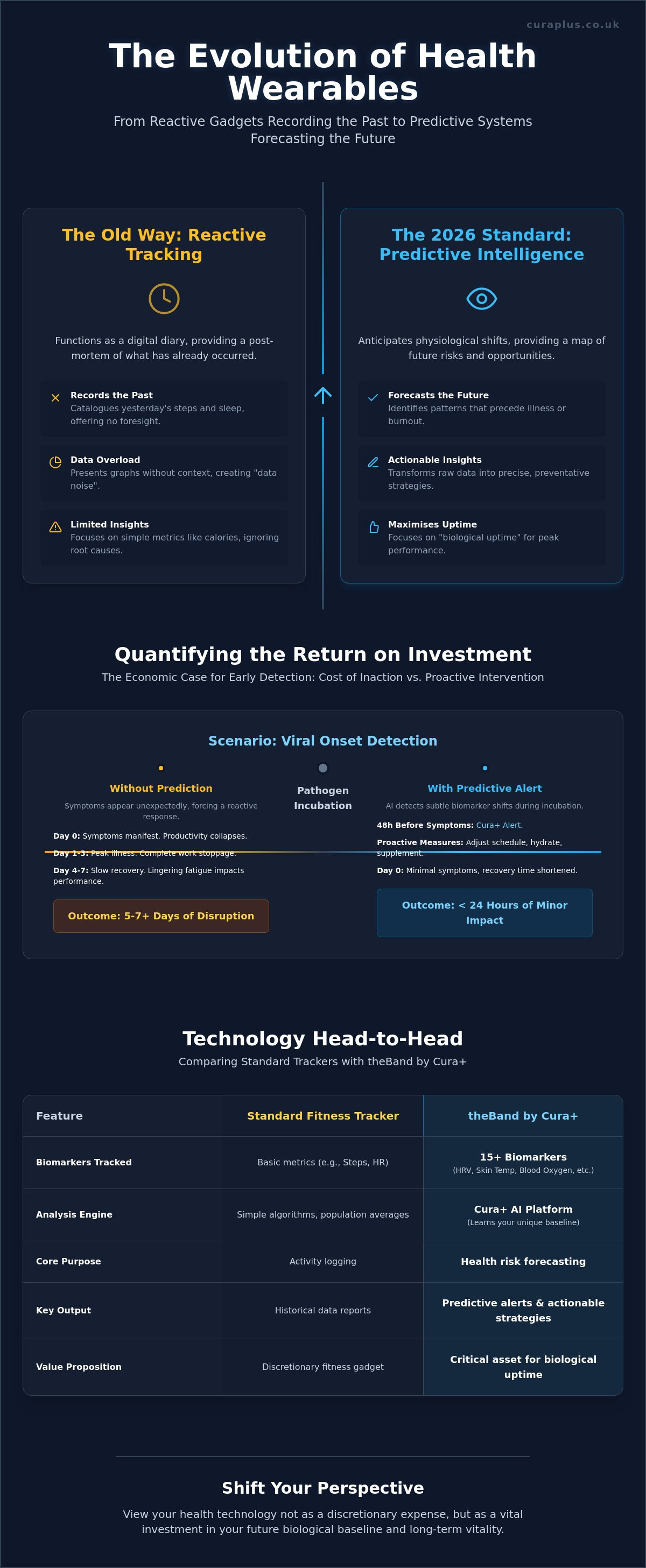
Comparison: theBand by Cura+ vs. Traditional Trackers
The primary distinction between theBand and traditional fitness trackers lies in their core data philosophy. Most mass-market devices are designed to answer a single question: "What happened?" They function as historical logs, recording steps taken or calories burned after the fact. In contrast, theBand is engineered to answer "What will happen?" This shift from reactive logging to predictive forecasting is central to justifying the cost of a health wearable in a professional context. Whilst standard trackers nudge users with generic reminders to move, theBand delivers clinical precision alerts based on physiological shifts that the naked eye cannot detect. Justifying the cost of a health wearable becomes a straightforward exercise when you compare the depth of insight provided by a multi-biomarker array against the surface-level data of a standard pedometer.
Sensor Sophistication and Data Fidelity
High-fidelity data is the foundation of any reliable health outcome. Traditional trackers typically rely on a single green-light PPG sensor to estimate heart rate. theBand utilises a high-density array capable of monitoring 15+ separate biomarkers simultaneously. This includes medical-grade sensors for skin temperature, blood oxygen, and electrodermal activity. The sampling frequency is significantly higher than consumer-grade alternatives; this is essential for capturing accurate heart rate variability (HRV) and respiratory patterns. Without this level of fidelity, the AI cannot distinguish between a state of high performance and the early markers of systemic fatigue.
Actionable Insights vs. Vanity Metrics
The "10,000 steps" goal is a legacy metric that often provides a false sense of security. It is a poor indicator of systemic health, as it ignores the quality of recovery, hormonal balance, and autonomic nervous system status. theBand avoids these vanity metrics, instead translating complex biomarkers into a single, intuitive health dashboard. This allows for a comprehensive view of your biological state at a glance. Additionally, the platform supports remote family monitoring, providing peace of mind by allowing you to proactively care for loved ones through shared data insights. Proactive care amongst family members ensures that health management is a collective, informed effort.
This level of sophistication requires a device that can be worn 24/7 without compromise. theBand features a refined aesthetic and durable build quality specifically designed for professional environments, ensuring it remains as functional in the boardroom as it is during a recovery session. If you are ready to move beyond basic tracking and embrace predictive intelligence, explore the technical specifications of theBand to see how it redefines personal health management.
Conclusion: Securing Your Future Health Baseline
The transition from viewing a health wearable as a discretionary expense to recognising it as a vital health asset is a hallmark of the 2026 wellness landscape. We no longer live in an era where guesswork is acceptable for high-stakes personal health. By shifting your perspective, you realise that justifying the cost of a health wearable is essentially about valuing your future biological potential. theBand, powered by the Cura+ AI Platform, occupies a unique position in the UK health market, offering a level of predictive sophistication previously reserved for clinical environments. It is time to move beyond reactive habits and embrace a lifestyle dictated by data rather than symptoms. True empowerment is found in physiological clarity, allowing you to navigate your career and personal life with absolute confidence in your internal state.
Starting Your Predictive Journey
The first step in this transformation is establishing a comprehensive health baseline. This initial phase is critical, as it allows the Cura+ AI to begin the "onboarding" process of understanding your unique biology. Unlike generic devices that apply universal standards, this system spends the first few weeks learning your specific rhythms, stress responses, and recovery patterns. This period of calibration ensures that every alert you receive is tailored specifically to your body. As the AI synthesises your data, the path toward self-optimisation becomes clear and actionable. You can take the lead in this new era of wellness by joining the pre-launch for theBand by Cura+, securing early access to our most advanced sensor array yet.
The Peace of Mind Dividend
There is a profound psychological benefit to knowing that your health is being monitored by elite AI around the clock. This "peace of mind dividend" is perhaps the most significant return on your investment. It replaces the low-level anxiety of missing early warning signs with the quiet confidence of precision. You no longer need to wonder if your fatigue is a result of a late night or the start of a viral infection; the data provides the answer before you even ask the question. This level of insight allows for a more focused, productive, and resilient life. By choosing a system that prioritises predictive intelligence over vanity metrics, you are ensuring that your health remains a stable foundation for all your future endeavours. Secure your place in the future of health with theBand by Cura+ and begin your journey toward total biological mastery today.
Step Into the Future of Personalised Wellness
The choice between a standard tracker and a predictive system is a choice between looking back and moving forward. Throughout this guide, we've demonstrated that the real value of modern health technology lies in its ability to forecast risks before they manifest. Justifying the cost of a health wearable becomes a simple calculation when you weigh the price against the preservation of your peak performance. By integrating 15+ essential biomarkers with sophisticated AI-driven predictive alerts, theBand provides the clinical precision required for early illness detection. Designed and engineered in the UK, this platform ensures you're never caught off guard by your own biology. It's time to move beyond the limitations of legacy gadgets and embrace a lifestyle defined by clarity and control.
Invest in your predictive health intelligence with theBand by Cura+
Your journey toward biological mastery starts with a single, data-driven decision. We're here to help you navigate that path with confidence and precision.
Frequently Asked Questions
Is theBand by Cura+ better than a standard smartwatch for health?
Yes, theBand is technically superior because it prioritises predictive health intelligence over generic smartwatch features. Whilst standard watches focus on notifications and basic step counting, theBand utilises a high-density array to monitor 15+ biomarkers. This allows for clinical-grade precision in identifying physiological shifts that consumer devices often miss, moving beyond reactive logs to provide a visionary look at your future health.
Why does a health wearable require a monthly subscription?
The subscription fee is necessary to fund the continuous cloud-based processing and the ongoing evolution of the Cura+ AI Platform. Sophisticated predictive algorithms require significant computational power that wrist-worn hardware cannot provide locally. This recurring investment ensures your device remains at the cutting edge of preventative science through regular software refinements and medical-grade data security.
Can a wearable really detect illness before I feel symptoms?
Yes, theBand can identify the early markers of viral onset up to 48 hours before physical symptoms manifest. By monitoring subtle deviations in skin temperature and heart rate variability, the AI detects the body's initial immune response during the incubation period. This early warning is a key factor in justifying the cost of a health wearable for professionals who cannot afford unexpected downtime.
What biomarkers does theBand track that others do not?
theBand monitors over 15 essential biomarkers, including electrodermal activity for stress and high-fidelity heart rate variability. Many mass-market trackers only provide basic pulse readings, whereas our system captures respiratory patterns and skin temperature with clinical precision. These additional data points allow the Cura+ AI to build a much more comprehensive and accurate picture of your systemic health.
How does the AI ensure my health data remains private and secure?
Your health data is protected by medical-grade encryption and stored in compliance with the most rigorous UK data protection standards. The Cura+ AI Platform was engineered with a privacy-first architecture, ensuring that your biological information remains accessible only to you and those you explicitly authorise. We view data security as a fundamental component of our professional commitment to your long-term wellbeing.
Is a predictive health wearable worth it if I am already fit?
Even for those at peak fitness, a predictive wearable is a vital tool for maintaining biological uptime and preventing overtraining. Physical fitness does not grant immunity to viral illness or chronic stress. By monitoring your internal state, theBand helps you identify when your body requires recovery before a decline in performance occurs, making justifying the cost of a health wearable easy for high achievers.
How long does it take for the AI to establish my health baseline?
The Cura+ AI typically requires a few weeks of continuous wear to establish a statistically significant health baseline. During this onboarding phase, the system learns your unique physiological rhythms and responses to various stressors. Once this baseline is finalised, the AI can accurately identify even the most subtle deviations, providing you with highly personalised and reliable predictive alerts.
Can I monitor my family members’ health remotely with this device?
Yes, theBand supports remote monitoring features designed for proactive care amongst loved ones. You can grant permission for family members to view specific health insights through a secure dashboard. This functionality is particularly valuable for supporting elderly relatives or ensuring the wellbeing of family members who live apart, allowing for early intervention if their physiological data indicates a potential health shift.


