


Why does your current device suggest a peak performance day whilst your body feels completely drained? It's a common frustration to receive a high readiness score only to find yourself struggling through a basic training session. If you've felt the exhaustion of information overload or the fear of an impending illness that your tracker missed, you understand that generic data is no longer sufficient. Choosing the right wearable for tracking recovery in 2026 requires a shift from reactive logging to predictive physiological intelligence. You deserve a sophisticated framework that replaces uncertainty with clinical-grade clarity.
This article provides the definitive checklist for selecting a recovery-focused device that delivers actionable insights. You'll learn which specific biomarkers, from heart rate variability to skin temperature, actually dictate your readiness for peak performance. We'll explore how to evaluate high-end solutions like theBand and the Cura+ AI Platform amongst the broader market. By the end of this guide, you'll have the confidence to choose a system that favours predictive accuracy over simple activity tracking; this ensures you never miss a critical physiological signal again.
Key Takeaways
- Understand why traditional fitness trackers fail by relying on retrospective logs and how to identify devices that offer real-time physiological insights.
- Discover the essential biomarkers, including Heart Rate Variability (HRV), that define a high-performance wearable for tracking recovery and systemic health.
- Identify the critical hardware requirements for clinical-grade monitoring, such as a minimum sensor density of ten distinct biomarkers and continuous sampling frequencies.
- Master the "Traffic Light" strategy to transition from passive data observation to an active, predictive recovery plan that helps you organise your training.
- Explore how theBand and the Cura+ AI Platform utilise advanced sensor arrays to provide the predictive intelligence required to optimise your biological readiness.
Beyond the Step Counter: Why Basic Wearables Fail at Recovery Tracking
The journey of the fitness tracker began with simple accelerometers designed to count steps and estimate caloric burn. These early devices provided a retrospective look at movement, but they were fundamentally limited in their ability to assess the internal state of the user. To choose a truly effective wearable for tracking recovery, one must look beyond these legacy systems and embrace multi-sensor arrays that monitor the body’s complex feedback loops. Modern health optimisation demands more than a digital log of yesterday's efforts; it requires a real-time assessment of systemic readiness.
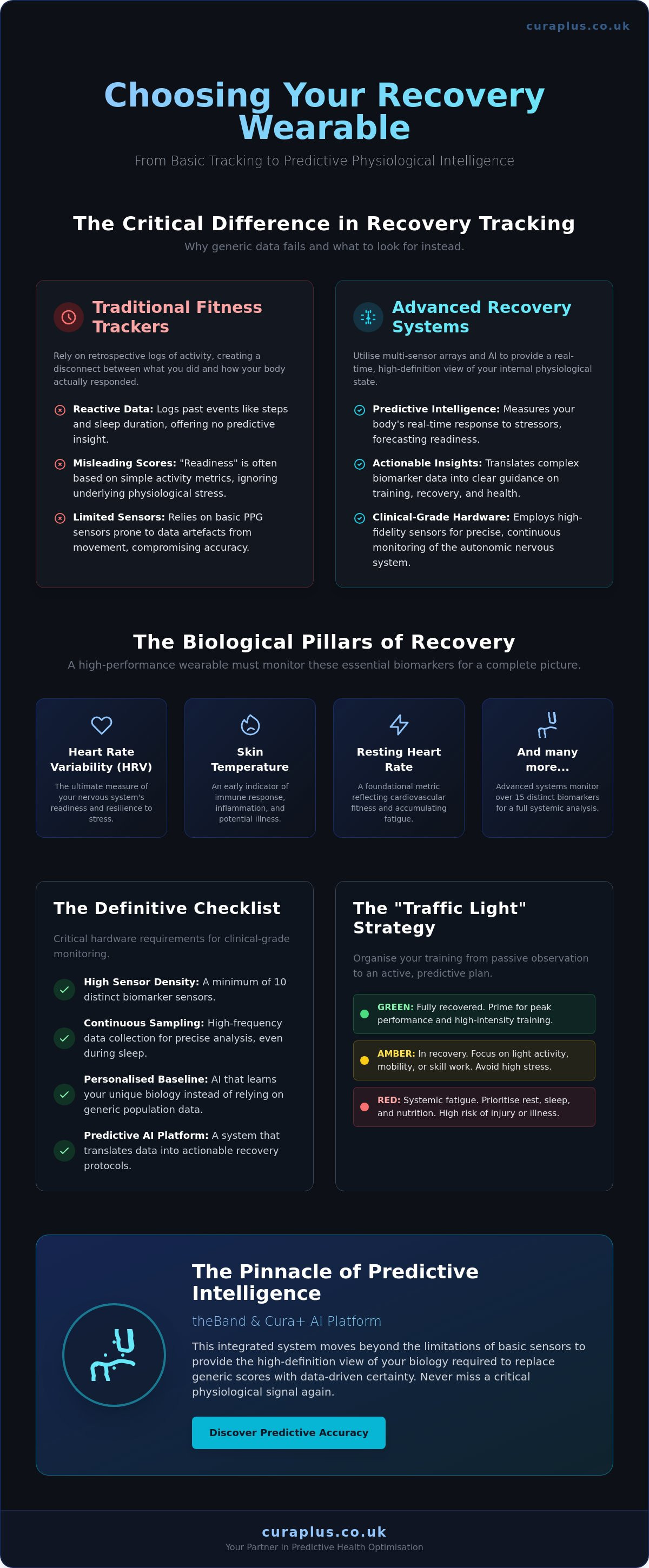
Traditional trackers suffer from a persistent "lag" problem. They record what you did, such as the distance you ran or the hours you slept, but they fail to capture how your body responded to those stressors in real-time. This creates a disconnect between activity tracking and true physiological monitoring. Whilst a basic device might show a successful workout, it may ignore the systemic fatigue accumulating in your nervous system. For high-performers, this inaccuracy carries a heavy psychological toll. There is nothing more disheartening than a device suggesting you're at peak performance whilst your body is quietly signalling for rest. This misalignment breeds distrust in the data and can lead to overtraining or burnout.
Activity tracking measures the external world, whilst physiological monitoring measures the internal response. A step counter doesn't know if you're fighting a viral infection or experiencing high psychological stress. True recovery tracking requires a transition to monitoring the autonomic nervous system, which acts as the ultimate arbiter of your readiness. Sophisticated systems, such as theBand paired with the Cura+ AI Platform, move beyond the limitations of basic sensors to provide a high-definition view of your biology. This level of precision is the only way to replace the frustration of generic scores with the calm control of data-driven certainty.
The Limitations of Optical Heart Rate Sensors
Most consumer wearables rely on Photoplethysmography (PPG) sensors. These emit light into the skin to measure blood flow, but their integrity is often compromised by external factors. Movement during sleep or subtle shifts in skin tone can lead to data artifacts that skew your recovery metrics. Relying on single-point heart rate data is insufficient because it lacks the resolution required for autonomic nervous system analysis. To achieve clinical-grade insight, a wearable for tracking recovery must maintain high-fidelity monitoring even during the quietest moments of rest, ensuring that every heartbeat is captured with absolute precision.
Why "Ready to Train" Scores Can Be Misleading
Generic readiness scores often rely on opaque algorithms that over-prioritise recent movement. If you walked 10,000 steps yesterday, a basic device might assume you're active and healthy, regardless of whether your resting heart rate is climbing or your HRV is plummeting. This is why building a health baseline is essential for anyone serious about self-optimisation. Without a personalised baseline, a recovery score provides reactive data rather than predictive intelligence. You cannot master what you haven't first accurately measured against your unique biological norm. True readiness is found at the intersection of how you feel and what your biomarkers reveal.
The Biological Pillars of Recovery: Essential Biomarkers to Monitor
Recovery is frequently misunderstood as a passive state of inactivity. In reality, it is an active, complex biological process where the body strives to return to homeostasis after physical or mental exertion. A high-performance wearable for tracking recovery must do more than count hours of rest; it must quantify the internal repair mechanisms at work. Whilst many consumer devices focus solely on heart rate, a sophisticated approach monitors over 15 distinct biomarkers to provide a comprehensive view of your physiological landscape. These advanced devices can capture a variety of distinct patient health indicators, allowing for a level of precision previously reserved for clinical settings.
Sleep architecture is a vital component of this repair cycle. Deep sleep facilitates physical tissue repair and growth hormone release, whilst REM sleep is essential for cognitive processing and emotional regulation. If your device cannot accurately distinguish between these stages, you are missing half the picture. True mastery over your health requires understanding how every hour of rest contributes to your systemic readiness. Data-driven clarity replaces guesswork, ensuring you know exactly when your body has completed its restorative work.
Heart Rate Variability: The Gold Standard
Heart Rate Variability (HRV) remains the most critical metric for assessing the autonomic nervous system. It reflects the delicate balance between the sympathetic (fight-or-flight) and parasympathetic (rest-and-digest) branches. A high-quality wearable for tracking stress patterns must prioritise high-frequency sampling to detect the subtle millisecond differences between heartbeats. When HRV trends downward, it signals that your body is under significant strain, suggesting you should reduce training intensity to avoid overreaching. Conversely, a stable or rising HRV indicates that you are primed for high-intensity efforts. It's a clear, objective signal of your internal capacity.
Skin Temperature and Respiratory Rate
Beyond heart metrics, skin temperature and respiratory rate serve as early warning systems for the body. Minor deviations in nocturnal skin temperature can signal the onset of viral stress long before symptoms manifest. By tracking immune health proactively, you can adjust your behaviour to mitigate illness and avoid forced recovery periods. Respiratory rate is equally telling; an elevated rate often indicates physiological strain or poor cardiovascular recovery. Monitoring these pillars ensures that your wearable for tracking recovery provides a truly predictive service. For those seeking this level of clinical precision, exploring the capabilities of theBand and the Cura+ AI Platform offers a path to total biological clarity.
The Definitive Checklist for Evaluating Recovery Wearables
Selecting a wearable for tracking recovery is no longer a matter of comparing aesthetic preferences or simple step-counting features. In 2026, the elite user requires a device that functions as a high-fidelity laboratory on the wrist. This rigorous evaluation ensures your investment delivers the predictive intelligence necessary for true physiological mastery. A sophisticated device should not merely report what has happened; it must anticipate what your body needs next. To achieve this, your chosen hardware and software must meet specific, uncompromising standards of data density and analytical depth.
Sensor density is the primary differentiator in the current market. A device that monitors fewer than 10 distinct biomarkers provides a fragmented view of your health. You require a multi-sensor array capable of capturing complex interactions between your cardiovascular, respiratory, and integumentary systems. Equally critical is the sampling frequency. Many entry-level trackers rely on "snapshots" taken at intervals, which can miss significant autonomic fluctuations. Continuous monitoring is the only way to ensure data integrity, especially during the restorative hours of sleep. If a device cannot maintain this level of scrutiny whilst remaining comfortable enough for 24/7 wear, its utility is severely diminished.
Finally, consider the security and application of your data. Biometric information is the most personal data you possess; therefore, clinical-grade encryption is a non-negotiable requirement. Beyond security, the platform must move from historical charts to predictive alerts. The transition from reactive logging to proactive health management is powered by AI integration that understands your unique biological baseline. This allows the system to warn you of impending strain before you feel the physical symptoms, turning your wearable for tracking recovery into a true partner in your performance journey.
Technical Specifications Checklist
- Clinical-Grade Sensors: Verify the presence of a high-resolution pulse oximeter (SpO2) and a dedicated skin temperature sensor for immune health monitoring.
- Raw Data Accessibility: Ensure the platform allows for the export of raw biometric data, enabling deeper review by health professionals if required.
- Persistent Battery Life: A minimum battery life of 5 days is essential to avoid frequent data gaps that can disrupt the accuracy of your long-term recovery trends.
Software and AI Capabilities Checklist
- Anomaly Detection: Look for "Early Warning" systems that identify subtle deviations from your baseline, signalling potential overtraining or illness.
- Intelligent Guidance: Evaluate the depth of the AI health and wellness coach to ensure it provides actionable, context-aware advice rather than generic fitness tips.
- Personalised Baseline Calibration: The software must prioritise your historical data over population averages to provide insights that are truly relevant to your specific physiology.
Interpreting the Data: How to Organise Your Recovery Strategy
Owning a sophisticated wearable for tracking recovery provides you with a wealth of information, but data alone doesn't guarantee progress. The true value of physiological intelligence lies in your ability to synthesise these numbers into a coherent, actionable strategy. Many users fall into the trap of "data watching," where they observe fluctuations without making meaningful adjustments to their behaviour. To achieve true self-optimisation, you must move from passive observation to active intervention. This requires a structured approach to your daily readiness that accounts for both your physical output and your internal repair mechanisms.
Implementing a "Traffic Light" system is a practical way to organise your daily routine. This framework simplifies complex biometric data into three distinct readiness states:
- Green: Your biomarkers indicate homeostasis and high readiness. This is the optimal window for peak physical and cognitive output.
- Amber: Subtle deviations suggest accumulating strain. You should moderate your intensity and prioritise nutritional support and hydration to prevent further decline.
- Red: Significant physiological stress is detected. Total rest or very light active recovery is required to allow your systems to recalibrate and avoid overtraining.
Aligning your recovery data with lifestyle factors like nutrition and hydration creates a powerful feedback loop. An elevated resting heart rate might indicate dehydration or a late-night meal that disrupted your sleep architecture. By adjusting these variables, you can observe real-time improvements in your next readiness score. Long-term success depends on your ability to analyse trends over weeks and months rather than reacting impulsively to a single night of poor sleep. Consistency in your baseline is the ultimate goal.
Adjusting Your Lifestyle Based on Predictive Alerts
When your wearable predicts a downward trend in immune health, it's a signal to intervene before symptoms arise. This might mean improving your sleep hygiene or choosing a light walk over a high-intensity session. Active recovery, such as Zone 1 movement, often facilitates faster repair than complete sedentariness by promoting circulation without adding systemic stress. Using these alerts to optimise your work-life balance ensures that you're never caught off guard by avoidable fatigue.
The Role of Personalised Health Coaching
Raw data can occasionally lead to "health anxiety" if the context is missing. High-end platforms like the Cura+ AI Platform provide the "so what" behind the numbers, acting as a digital strategist for your body. This intelligence helps you understand how specific stressors affect your journey toward your biological peak. Instead of guessing why your HRV is low, you receive a clear explanation and a path forward. To begin mastering your physiological data today, explore how the Cura+ AI Platform transforms insights into action.
theBand by Cura+: The Pinnacle of Predictive Recovery Intelligence
Mastering your physiological readiness requires a tool that transcends the capabilities of standard consumer electronics. theBand represents the ultimate predictive health wearable in the UK; it's a system engineered for those who refuse to settle for generic insights. Whilst other devices provide a fragmented view of your health, theBand utilises an advanced sensor array to monitor 15+ biomarkers simultaneously. This high-definition data stream is processed by the Cura+ AI Platform, transforming raw metrics into real-time recovery coaching. You no longer have to guess your state of readiness. Instead, you gain total clarity and control over your biological future through a partnership with visionary technology.
Choosing a sophisticated wearable for tracking recovery means moving beyond the limitations of historical logging. theBand is designed to act as a high-level consultant for your body, providing the predictive intelligence necessary to anticipate systemic needs. By analysing the complex interplay between your autonomic nervous system and external stressors, the Cura+ AI Platform delivers actionable guidance that aligns with your unique baseline. This process replaces uncertainty with the calm control of discovery, allowing you to navigate your training and lifestyle with absolute confidence. It's the difference between managing symptoms and mastering a system.
Why theBand is Different from Fitness Trackers
Standard fitness trackers often fail because they lack the sensor density required for true systemic analysis. theBand is built with clinical precision, ensuring that the hardware captures every subtle physiological shift with uncompromising integrity. Its proactive nature is its greatest strength. By detecting deviations in your biomarkers before physical symptoms manifest, it issues alerts that allow for immediate intervention. This exclusivity and sophistication define the Cura+ ecosystem; it's a platform built for those who share a commitment to excellence and require data that is both methodical and reliable.
Securing Your Future with Cura+
Investing in a high-end wearable for tracking recovery is a commitment to your long-term health trajectory. We invite you to join the pre-launch phase of theBand and experience the next evolution of proactive wellness. Our commitment to British engineering excellence is matched only by our dedication to your data privacy. Your biometric profile is secured with clinical-grade encryption, ensuring your journey toward self-optimisation remains entirely your own. The future of wellness is already accessible through data, and theBand is your gateway to that clarity.
It's time to transition from reactive logging to the sophisticated mastery of your own biology. By choosing theBand and the Cura+ AI Platform, you're not just buying a device; you're adopting a strategic approach to your health. Secure your place at the forefront of predictive intelligence and begin your journey toward your biological peak today. Transition to a proactive lifestyle and experience the quiet excitement of true physiological discovery.
Mastering Your Physiological Potential
Transitioning from basic activity logs to a sophisticated wearable for tracking recovery is a fundamental shift in how you manage your long-term health. You've discovered that true systemic repair requires monitoring the complex interplay of HRV, sleep architecture, and skin temperature. By applying a rigorous evaluation checklist and a structured readiness strategy, you can replace the anxiety of inconsistent scores with the clarity of clinical-grade data. Mastering these metrics allows you to move beyond simple management into a state of proactive self-optimisation.
The future of personal health isn't found in looking back at yesterday's steps; it's found in predicting tomorrow's needs. theBand by Cura+ provides this visionary edge by monitoring 15+ essential biomarkers with clinical-grade sensor precision. Through predictive AI health alerts, you gain the power to intervene before strain leads to burnout. Discover theBand by Cura+: Pre-order your gateway to predictive health and begin your journey toward total biological mastery. You're now equipped to turn uncertainty into discovery and lead your body toward its biological peak.
Frequently Asked Questions
Is a wearable for tracking recovery worth it for non-athletes?
Yes, a wearable for tracking recovery is an invaluable tool for anyone seeking to master their physiological health, not just competitive athletes. High-performers in any professional field encounter mental and emotional stressors that directly impact the autonomic nervous system. By monitoring these internal signals, you can adjust your workload and lifestyle to prevent burnout and maintain peak cognitive function. It's about managing your biological energy as a complex system rather than just a series of tasks.
How long does it take for a wearable to establish a recovery baseline?
It typically takes between 14 and 30 days of consistent wear to establish a reliable biological baseline. This period allows the underlying AI algorithms to understand your unique circadian rhythms and physiological norms. Once this baseline is set, the system can identify subtle deviations that signal either progress or potential strain. This ensures that the insights you receive are tailored to your specific biology rather than generic population averages.
Can a recovery tracker really tell if I am getting sick?
Whilst these devices don't provide a clinical medical diagnosis, they are highly effective at detecting physiological anomalies that often precede physical symptoms. An increase in nocturnal skin temperature combined with a significant drop in HRV frequently signals that the body is diverting resources to an immune response. Identifying these shifts early allows you to prioritise rest and potentially mitigate the severity of an impending illness before it forces a total halt to your routine.
What is the most important metric for tracking recovery?
Heart Rate Variability (HRV) is the primary metric for assessing the state of your autonomic nervous system. It measures the millisecond variations between heartbeats to determine whether your body is in a rest-and-digest or fight-or-flight state. When used within a comprehensive wearable for tracking recovery, HRV provides the most direct insight into your systemic readiness. It's the most reliable indicator of how much stress your body can handle on any given day.
Should I wear my recovery tracker 24/7?
Continuous 24/7 wear is essential for capturing the high-fidelity data required for accurate recovery analysis. The most critical biomarkers, such as resting heart rate and sleep architecture, are measured during your restorative hours. Removing the device for extended periods creates data gaps that can compromise the integrity of your long-term health trends. Consistent wear ensures the Cura+ AI Platform has the necessary data to provide predictive rather than reactive guidance.
How does alcohol or stress affect my recovery score?
Both alcohol consumption and high psychological stress significantly degrade your recovery metrics. Alcohol acts as a systemic toxin that elevates your resting heart rate and disrupts deep sleep cycles, often resulting in a lower readiness score the following morning. Similarly, chronic stress keeps the sympathetic nervous system engaged, preventing the body from entering the deep restorative states necessary for homeostasis. Monitoring these effects helps you make more informed lifestyle choices.
Are screenless wearables better for tracking recovery?
Screenless wearables are often preferred for recovery tracking because they minimise digital distractions and prioritise sensor density over visual display. Devices like theBand focus on clinical-grade data collection whilst offering a more discreet and comfortable form factor for 24/7 wear. This design choice often allows for superior battery life and more sophisticated sensor arrays. By removing the screen, the focus remains entirely on the quiet excitement of physiological discovery through the companion app.
What is the difference between a fitness tracker and a health wearable?
A fitness tracker primarily records external activity, such as steps and distance, whilst a health wearable focuses on internal physiological intelligence. Health-focused systems, like theBand and the Cura+ AI Platform, utilise multi-sensor arrays to monitor systemic repair and predictive readiness. The shift is from reactive logging of what you have done to predictive insight into what your body is capable of doing next. It is a transition from simple activity logs to sophisticated biological mastery.


