


What if your body could alert you to an impending illness days before you felt a single symptom? With nearly 50 per cent of global deaths linked to inflammation-related conditions, the stakes for personal monitoring have never been higher. Most of us are understandably frustrated by the traditional 'sick-care' model, where we only receive data about our health once we are already unwell. You might worry about the long-term impact of silent inflammation, yet the inconvenience of frequent clinical blood tests makes proactive monitoring feel like an impossible chore. By tracking inflammation levels with a wearable, you can finally transform these vague anxieties into clear, actionable health intelligence.
The landscape of preventative medicine is shifting from periodic snapshots to continuous, real-time insight. We will explore how the latest innovations in bio-sensing technology and the Cura+ AI Platform are empowering individuals to detect physiological shifts early and optimise exercise recovery. Discover how theBand is redefining proactive wellness in 2026 by providing a high-definition view of your biology that was previously hidden from sight. This is the transition from managing symptoms to mastering your complex internal systems with clinical precision.
Key Takeaways
- Understand how silent inflammation often evades traditional clinical checks and how multi-sensor technology identifies these internal signals in real-time.
- Discover why the 'Biomarker Symphony', which integrates over 15 distinct metrics, is essential for moving beyond the limitations of isolated CRP blood tests.
- Learn the methodology for establishing a 14-day personalised health baseline to detect subtle deviations that signal an impending inflammatory flare.
- Explore how tracking inflammation levels with a wearable, such as theBand, enables a transition from reactive symptom management to proactive health mastery.
- Gain insight into how the Cura+ AI Platform synthesises complex biological data into clear, predictive alerts for optimised recovery and performance.
Understanding Inflammation as a Digital Biomarker
Systemic inflammation acts as the body's primary internal alarm system. Whilst acute inflammation is a necessary, short-term response to injury or infection, chronic inflammation operates as a persistent, low-grade threat that often remains undetected for years. This "silent inflammation" is a significant contributor to global mortality, yet it frequently evades detection during standard clinical check-ups that only occur once or twice a year. By Understanding Inflammation as a dynamic biological process rather than a static event, we can begin to appreciate the necessity of continuous monitoring. The emergence of digital biomarkers offers a sophisticated solution. These are physiological signals captured by advanced sensors that reflect internal biological states in real-time. Tracking inflammation levels with a wearable allows for a fundamental transition away from reactive medicine, where we only act once symptoms appear, toward a model of proactive mastery over our own health data.
The Limitations of Traditional Blood Tests
Standard clinical assessments typically rely on C-reactive protein (CRP) levels measured via a venous blood draw. Whilst CRP is an established marker, a single test provides only a momentary glimpse into a complex, fluctuating system. It's a snapshot rather than a trend. Accessing regular testing through the NHS or private providers involves significant logistical friction, including appointment wait times and the physical inconvenience of the procedure. There is also a notable delay between the laboratory draw and receiving actionable insights. This temporal gap means that by the time you review your results, the inflammatory event may have already progressed or subsided. This makes it incredibly difficult to link specific lifestyle choices or early-stage viral triggers to your body's internal response with any degree of precision.
Why 2026 is the Turning Point for Wearable Tech
The technological landscape of 2026 has transformed the feasibility of long-term biological tracking. Sensor sensitivity has reached a critical threshold where minute shifts in skin temperature and vascular response can be detected with clinical-grade accuracy. Tracking inflammation levels with a wearable is no longer restricted to research settings or elite athletic programmes. Modern AI platforms now excel at filtering environmental noise from biometric data, allowing true inflammatory signals to emerge with clarity. This capability is fundamental to how the future of personal health is being redefined by predictive intelligence. Instead of looking backward at what went wrong, we are now equipped to look forward, using data-driven foresight to maintain an optimal internal baseline and intervene before health issues escalate.
How Modern Wearables Track Inflammation Levels Non-Invasively
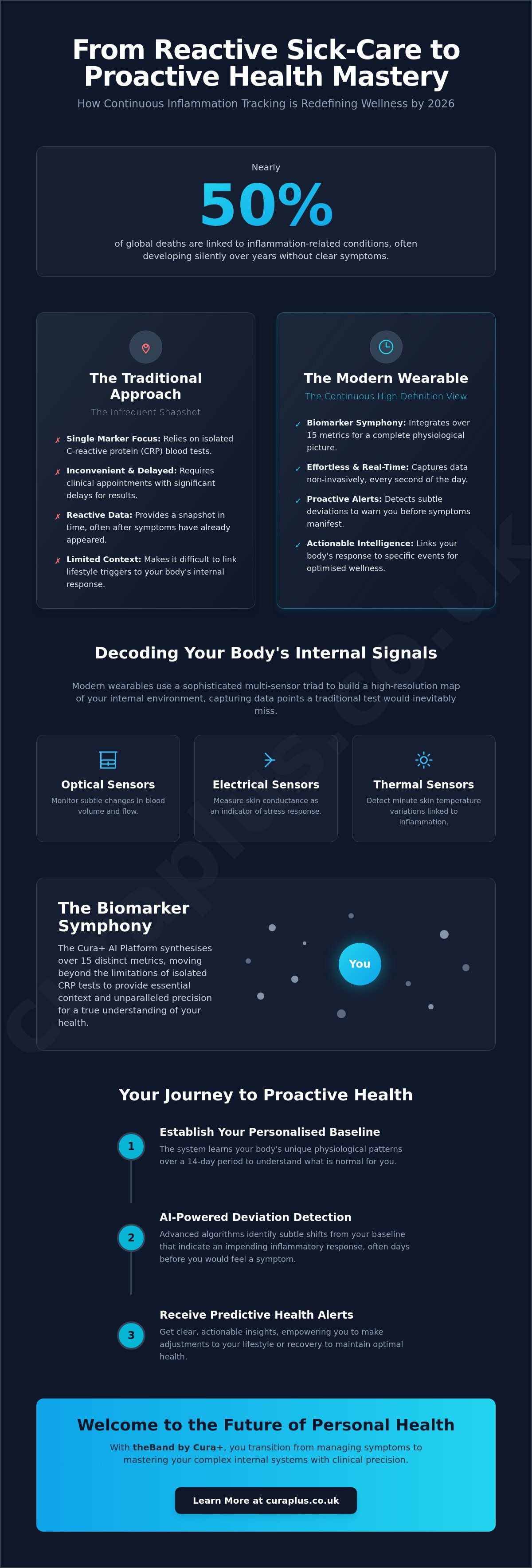
Tracking inflammation levels with a wearable requires a sophisticated synergy of diverse hardware components working in unison. It's no longer sufficient to rely on a single data point. Modern devices utilise a multi-sensor triad: optical sensors to monitor blood volume changes, thermal sensors to detect minute heat variations, and electrical sensors to measure skin conductance. This integrated approach allows for the observation of biological processes as they unfold. By capturing metrics every second rather than once a day, these systems build a high-resolution map of your internal environment. This granularity is essential; it reveals the subtle oscillations that a morning finger-prick test would inevitably miss. The transition from invasive blood draws to continuous sensing represents a paradigm shift in how we understand our body's daily defence mechanisms.
A particularly significant advancement is the emergence of sweat-based biomarker sensing. This technology allows for the direct measurement of proteins and cytokines through the skin's surface without a single needle. Research into these molecular hallmarks suggests that we are moving beyond CRP as the sole indicator of health, allowing for a more nuanced detection of inflammatory signals. When these biochemical markers are cross-referenced with physiological data, the accuracy of health predictions increases exponentially. For those seeking this level of clarity, exploring the capabilities of theBand offers a glimpse into this future of non-invasive monitoring.
The Role of Heart Rate Variability (HRV)
Heart Rate Variability serves as a vital proxy for the autonomic nervous system's response to internal pressure. It reflects the delicate balance between your sympathetic "fight or flight" and parasympathetic "rest and digest" states. A sudden, unexplained drop in HRV often precedes a spike in inflammatory cytokines, acting as a physiological early warning system. Because inflammation places a heavy load on the nervous system, monitoring these fluctuations is a core component of a wearable for tracking stress patterns. When your HRV baseline shifts, it's often the first sign that your body is redirecting resources to manage an emerging inflammatory threat.
Thermal Monitoring and Immune Response
Nocturnal data provides the clearest window into your immune health. Whilst you sleep, the body's repair processes are most active, making skin temperature fluctuations a powerful immune signal. A deviation of just 0.3 degrees Celsius from your established baseline can indicate that the immune system is engaging an internal threat. It's crucial to distinguish these inflammatory "fever" spikes from normal circadian rhythm changes. Advanced thermal monitoring identifies these patterns with precision, allowing you to predict daytime performance levels based on the quality of your body's nocturnal recovery. This is not mere tracking; it is the science of proactive physiological intelligence.
Beyond CRP: Why Multi-Biomarker Context is Essential
While many clinical discussions focus exclusively on C-reactive protein (CRP), tracking inflammation levels with a wearable requires a much broader lens to achieve genuine accuracy. Relying on a single biomarker is often problematic because individual metrics can be skewed by temporary environmental factors, leading to inconsistent conclusions. Instead, sophisticated monitoring utilises a "Biomarker Symphony," synthesising over 15 distinct physiological signals to create a high-fidelity image of your internal state. A scientific review on non-invasive inflammation monitoring confirms that integrating multiple sensor inputs provides a more reliable assessment than isolated chemical markers. By correlating several "weak" signals; such as a slight elevation in resting heart rate combined with a subtle shift in respiratory rate, the Cura+ AI Platform can generate a "strong" health alert with clinical-grade precision.
Inflammation also leaves a distinct footprint on your sleep architecture. When the body is in an inflammatory state, it often prioritises immune activation over traditional recovery, leading to visible changes in the ratio between REM and Deep sleep. If your data shows a persistent decline in Deep sleep despite a consistent bedtime, it's a clear signal that your body is redirecting resources to manage an internal threat. This level of insight allows you to adjust your lifestyle before these internal shifts escalate into physical symptoms.
Correlating Stress, Sleep, and Inflammation
Poor sleep quality isn't merely a consequence of inflammation; it's a direct trigger. Even a single night of fragmented rest can stimulate a pro-inflammatory response the following morning, creating a cycle of physiological stress that is difficult to break. Utilising a wearable for tracking recovery allows you to verify if your "rest" is actually restorative or if your body remains in a state of high alert. This data is essential for distinguishing between exercise-induced inflammation, which facilitates muscle growth, and systemic inflammation, which indicates long-term biological strain.
The Power of 15+ Biomarkers
TheBand by Cura+ monitors an extensive array of metrics to ensure that no biological signal is overlooked. By observing oxygen saturation, respiratory rate, and pulse oximetry alongside primary inflammatory indicators, the system provides a holistic view that simpler devices cannot match. This multi-variate context is what allows for true predictive intelligence. Predictive healthcare is the use of multi-variate data to forecast physiological shifts before they manifest as symptoms. By understanding these complex interactions, you can master your health with a level of clarity that was previously reserved for clinical environments.
Using Predictive Intelligence to Manage Your Health Baseline
Mastering your internal environment begins with understanding your unique physiological signature. Tracking inflammation levels with a wearable is most effective when the data is contextualised against a stable, personalised baseline. This process typically requires a 14-day calibration period to account for natural fluctuations in sleep, activity, and nutrition. By establishing this foundation, the Cura+ AI Platform can distinguish between your standard biological rhythm and genuine deviations from the norm. It's not about comparing your stats to a population average; it's about understanding what 'optimal' looks like for you specifically. This transition from raw data collection to predictive alerts empowers you to make informed decisions before an inflammatory flare impacts your performance.
The role of AI health coaching is to provide 'just-in-time' interventions based on these subtle shifts. If your metrics indicate that systemic stress is rising, the system might suggest an extra hour of sleep or a specific nutritional adjustment. These are not generic tips. They are data-driven prompts designed to preserve your baseline. By moving beyond static snapshots, you gain the ability to change your behaviour in response to real-time biological needs. This is the essence of predictive intelligence; it replaces guesswork with clinical clarity.
Building Your Personal Health Baseline
Consistency is the cornerstone of data integrity. To accurately build a health baseline, you must commit to wearing your device continuously, particularly during sleep when the most critical immune signals are captured. Your 'normal' is a moving target influenced by your specific biology and lifestyle choices. Without a consistent data stream, the AI cannot identify the 'deviations from the norm' that signal an impending illness. Maintaining this discipline ensures that the insights you receive are both accurate and actionable.
Interpreting Predictive Alerts
When your wearable flags a 'High Inflammation' alert, it serves as a sophisticated prompt for immediate action. You might choose to increase hydration, prioritise anti-inflammatory nutrition, or scale back a planned high-intensity workout. A predictive alert is not a diagnosis, but a prompt for proactive self-care. These insights allow you to adjust your behaviour in real-time, effectively dampening the inflammatory response before it manifests as physical illness. To experience this level of physiological clarity, explore how theBand and Cura+ AI Platform can revolutionise your approach to wellness.
theBand by Cura+: The Pinnacle of Inflammation Tracking
theBand by Cura+ represents the definitive shift from consumer fitness gadgets to high-fidelity physiological intelligence. It is a sophisticated instrument designed specifically for those who refuse to settle for the reactive "sick-care" model. By tracking inflammation levels with a wearable that prioritises clinical-grade precision, users gain a level of self-mastery that was once impossible outside of a laboratory. The technology is underpinned by rigorous British engineering, ensuring that every data point is captured with the methodical reliability required for serious health management. This is not a tool for counting steps; it is a comprehensive system for navigating the complexities of human biology.
The true power of this system lies in the seamless integration between the multi-sensor hardware and the Cura+ AI Platform. Whilst the sensors gather raw biological signals, the AI synthesises this information into clear, actionable insights. This synergy transforms tracking inflammation levels with a wearable from a passive observation into a proactive health strategy. It acts as an early warning system, identifying subtle shifts in your internal environment before they escalate into significant health events. The result is a transition from uncertainty to clarity, providing you with the data needed to make high-stakes decisions about your wellness.
Sophisticated Design Meets Biological Rigour
We believe that high-level health intelligence should not come at the expense of personal style. theBand features an elite, minimalist aesthetic that fits seamlessly into a professional lifestyle, allowing for 24/7 monitoring without the intrusion of typical medical devices. Despite its understated appearance, the hardware is a powerhouse of biological sensing. It monitors a "Biomarker Symphony" of 15+ distinct metrics, providing a more complete picture of your health than any standard tracker on the market. This complexity is managed through an interface that prioritises clarity, ensuring that even the most sophisticated data is accessible and useful for daily life.
Your Partner in Longevity
In the era of AI-driven wellness, the Cura+ AI Platform functions as a high-level consultant for your body. It provides the strategic oversight needed to manage your health as a complex, interconnected system rather than a series of isolated symptoms. We understand that personal biological data is sensitive, which is why our commitment to data privacy and security is absolute. Your information is encrypted and protected, ensuring that your journey toward self-optimisation remains entirely private. By choosing theBand, you are investing in a long-term partnership dedicated to accuracy and longevity. Discover how to master your internal data by exploring theBand by Cura+ and take control of your biological future today.
Mastering Your Biological Future
The transition from reactive 'sick-care' to proactive health mastery is no longer a distant vision; it is a reality accessible through sophisticated data. By moving beyond the limitations of infrequent blood tests and embracing the continuous insights provided by the 'Biomarker Symphony', you can finally replace uncertainty with clinical clarity. Tracking inflammation levels with a wearable empowers you to detect the subtle physiological shifts that precede illness, allowing for 'just-in-time' interventions that preserve your long-term vitality. This is the essence of predictive intelligence: understanding your body's complex systems to prevent issues before they manifest as symptoms.
theBand by Cura+ is the pinnacle of this technological evolution. Engineered in the UK with clinical precision, it monitors 15+ critical biomarkers and utilises the Cura+ AI Platform to deliver personalised, predictive health alerts. Don't wait for symptoms to dictate your quality of life. Secure your health future with theBand by Cura+ and begin your journey toward total self-optimisation today. Your body is a complex system; it's time you had the tools to understand it perfectly.
Frequently Asked Questions
Can a wearable device really replace a blood test for inflammation?
No, it functions as a complementary tool rather than a direct replacement for clinical diagnostics. Whilst blood tests measure specific proteins like CRP at a single point in time, tracking inflammation levels with a wearable provides a continuous stream of physiological trends. This longitudinal data offers context that a snapshot test cannot capture, allowing you to observe how your body recovers from daily stressors in real-time.
Which biomarkers are the most important for tracking inflammation levels?
Effective monitoring relies on a combination of heart rate variability (HRV), resting heart rate, and nocturnal skin temperature. These metrics serve as primary indicators of autonomic nervous system strain and immune activity. When these signals are analysed alongside respiratory rate and oxygen saturation, they form a comprehensive picture of your internal state, moving beyond the limitations of isolated chemical markers to provide a holistic view of systemic health.
How long does it take for a wearable to establish my health baseline?
It typically takes 14 days of consistent wear to establish a statistically significant health baseline. During this calibration period, the Cura+ AI Platform learns your unique physiological rhythms, including your sleep architecture and cardiovascular responses. This duration is necessary to account for natural variations in your lifestyle, ensuring that future alerts are based on genuine deviations from your personal norm rather than temporary environmental noise.
Will tracking inflammation help me predict when I'm getting sick?
Yes, shifts in inflammatory markers often precede physical symptoms by several days. By tracking inflammation levels with a wearable, you can identify subtle increases in resting heart rate or drops in HRV that signal your immune system is engaging a threat. This early warning allows you to implement proactive measures, such as increasing rest or adjusting nutrition, potentially dampening the severity of an impending illness before it fully manifests.
Is theBand by Cura+ suitable for people without chronic conditions?
Absolutely, theBand is designed for anyone prioritising peak performance and long-term wellness. Even in the absence of chronic illness, "silent inflammation" can impact recovery, cognitive function, and metabolic health. By utilising this technology, healthy individuals can optimise their exercise intensity and manage daily stress with greater precision. It serves as a sophisticated guide for those who view health as a complex system to be mastered rather than symptoms to be managed.
How does AI improve the accuracy of wearable health data?
AI enhances accuracy by filtering environmental 'noise' and correlating multiple data points into a single, cohesive insight. The Cura+ AI Platform uses advanced algorithms to identify patterns amongst 15+ biomarkers, distinguishing between a high-intensity workout and an inflammatory flare. This predictive intelligence ensures that the alerts you receive are clinically relevant, replacing the fragmented data of standard trackers with clear, actionable intelligence tailored to your specific biology.
Can lifestyle changes like diet be reflected in my wearable's inflammation data?
Yes, your body's response to nutritional choices is often visible in your physiological trends. For example, consuming highly processed foods or alcohol can lead to a measurable decrease in HRV and an elevation in nocturnal skin temperature. Over time, these data points allow you to identify which specific dietary habits support your recovery and which trigger a pro-inflammatory response, providing a data-driven roadmap for personalised nutritional optimisation.
What should I do if my wearable shows a high inflammation alert?
You should treat a high inflammation alert as a prompt for proactive self-care rather than a medical diagnosis. Start by reviewing your recent activity, sleep quality, and stress levels to identify potential triggers. Implementing immediate adjustments, such as prioritising hydration or adding an extra hour of rest, can help your body return to its baseline. If the alert persists despite these lifestyle modifications, it may be a signal to consult a healthcare professional for a deeper investigation.


