


What if the first sign of a relative’s health decline wasn't a panicked midnight phone call, but a subtle data trend identified days before a crisis occurred? For many, the search for a family health tracking app UK residents can trust is born from the anxiety of geographic distance and the frustration of basic wearables that offer little more than step counts. You recognise that true security isn't found in a reactive alarm that triggers only after an accident. It's found in the clarity of predictive intelligence that allows for proactive care.
As the UK digital health market expands toward a projected £14.5 billion value in 2026, the industry is moving away from invasive monitoring toward sophisticated biomarker analysis. This article explores how predictive technology is providing a non-invasive way to remain connected to your family's health trends without compromising their independence. You'll learn how the latest MHRA regulatory updates are elevating the standard for medical software, enabling you to share professional-grade data directly with GPs. We will examine how this shift from reactive to predictive care offers the ultimate peace of mind through scientific rigour and data-driven insight.
Key Takeaways
- Understand the transition from reactive emergency alarms to predictive intelligence that identifies potential health crises before they manifest.
- Discover how a sophisticated family health tracking app UK families can utilise monitors 15+ biomarkers to provide a holistic view of systemic health.
- Learn why biomarker tracking preserves dignity and privacy more effectively than invasive in-home cameras or traditional sensors.
- Identify the steps required to establish a personalised health baseline, allowing for the early detection of subtle health deviations.
- Explore how professional-grade data from predictive wearables facilitates more informed and accurate consultations with UK medical professionals.
The Evolution of Family Health Tracking Apps in the UK
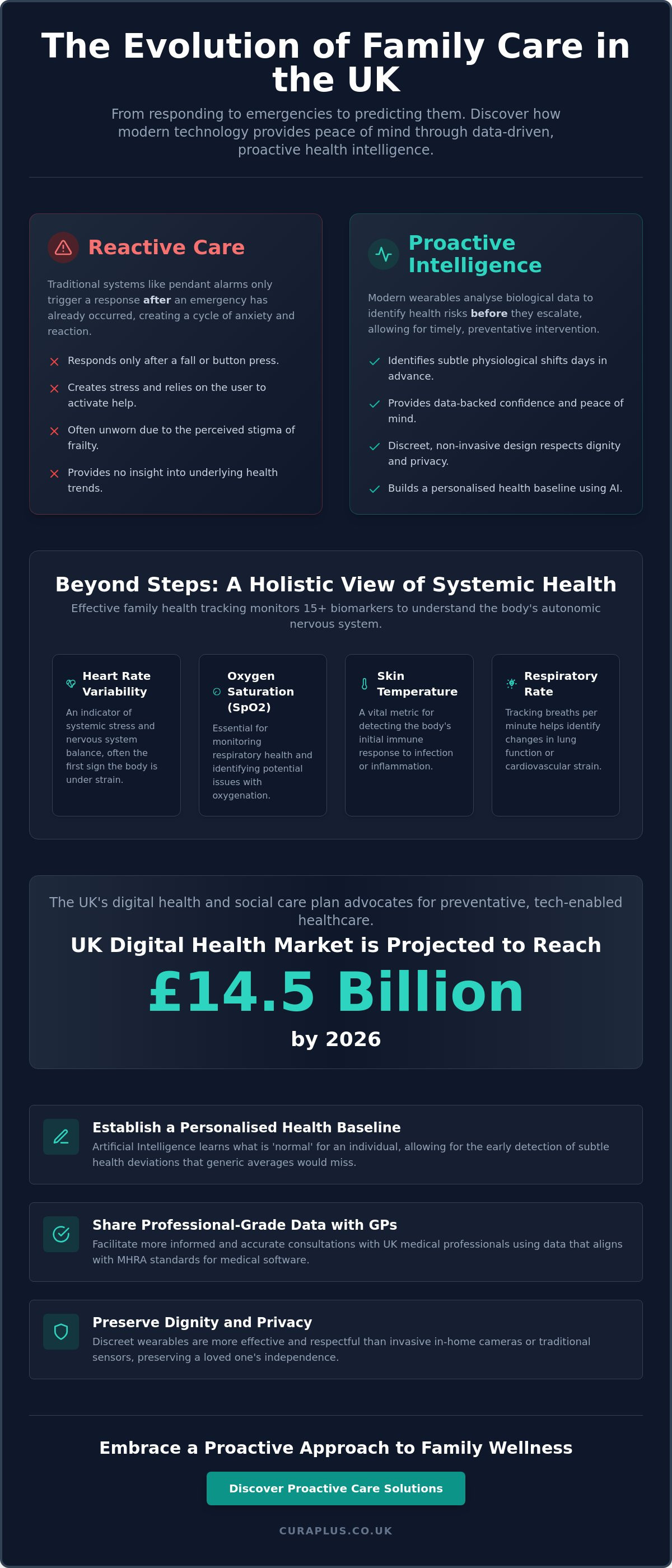
The landscape of remote care in Britain is undergoing a fundamental transformation. For years, the standard for safety was defined by the reactive alarm, a system designed to respond only after an emergency had occurred. Today, a sophisticated family health tracking app UK families can rely on represents a shift toward predictive monitoring. This evolution prioritises the analysis of biological data to identify risks before they escalate into crises.
Traditional "pendant" alarms, whilst once revolutionary, often fail in practice. Evidence suggests a high percentage of elderly individuals choose not to wear them due to the perceived stigma of frailty or the invasive nature of being "monitored." This leaves a dangerous gap in care that often results in the "dreaded phone call" families fear most. Modern Wearable technology has bridged this gap by offering non-invasive, aesthetically discreet solutions. These devices respect the user's dignity whilst providing far deeper insights than a simple camera or motion sensor ever could. UK families are no longer satisfied with basic step-trackers; they are seeking "health intelligence", a comprehensive understanding of systemic wellness.
Reactive vs. Proactive: Why the Distinction Matters
Reactive systems are inherently stressful. They rely on a button press or a fall detection event, meaning the crisis is already in progress by the time you are notified. Proactive monitoring operates on a different logic. It identifies subtle physiological shifts, such as changes in resting heart rate or respiratory quality, that often precede illness. This transition replaces constant anxiety with data-backed confidence. You aren't just waiting for a call. You're watching a trend. By observing these patterns, families can intervene days before a situation becomes critical, ensuring that "safety" is a constant state rather than a panicked response.
The Role of AI in Modern Elderly Care
Tracking 15+ Biomarkers: The Science of Remote Health Intelligence
Monitoring simple activity metrics like steps or basic heart rate is no longer sufficient for comprehensive care. A truly effective family health tracking app UK residents utilise must delve deeper into the body's internal systems. By tracking 15+ distinct biomarkers, we gain a holistic view of the autonomic nervous system, the command centre for the body's unconscious functions. This level of data allows us to move beyond superficial observations and into the realm of clinical-grade intelligence.
Key biomarkers that provide this necessary depth include:
- Heart Rate Variability (HRV): A measure of the variation in time between each heartbeat, serving as a leading indicator of systemic stress and nervous system balance.
- Oxygen Saturation (SpO2): Essential for monitoring respiratory health and identifying potential oxygenation issues.
- Skin Temperature: A vital metric for detecting the body's initial response to infection or inflammation.
- Respiratory Rate: Tracking breaths per minute to identify changes in lung function or cardiovascular strain.
A sudden drop in HRV often signals that the body is struggling to maintain equilibrium. When coupled with skin temperature and oxygen saturation levels, these metrics provide an early warning system for respiratory issues or viral infections. This data-driven approach aligns with the UK's digital health and social care plan, which advocates for a more preventative, tech-enabled healthcare model. It's a strategy that prioritises clarity over guesswork.
Identifying Viral Onset and Immune Response
Physiological shifts often occur well before physical symptoms manifest. A subtle, sustained rise in resting heart rate combined with an increase in skin temperature can predict a viral onset up to 48 hours before a fever or cough appears. Utilising a wearable for tracking immune health allows for earlier intervention, potentially reducing the severity of an illness. For elderly parents, this early detection means quicker consultations with medical professionals and significantly reduced recovery times.
Monitoring Sleep Quality and Recovery
Sleep architecture is a vital biomarker for cognitive health and physical restoration in seniors. By employing biometric tracking for wellness through a family health tracking app UK interface, families can identify disrupted sleep patterns or poor recovery scores that might otherwise go unnoticed. These recovery metrics help you understand if a parent is over-exerting themselves or if their body isn't adequately repairing itself overnight. Achieving this level of insight requires a shift from basic gadgets to professional-grade tools like theBand, which provides the clarity needed for long-term health management.
Comparing Traditional Alarms with Predictive Health Wearables
Traditional care models in the UK have historically relied on the red "pendant" button as the primary safety net. This reactive approach suffers from a significant flaw known amongst care professionals as the "Pendant Problem." Research in the social care sector frequently highlights that a high percentage of elderly users choose not to wear these devices. They often find them stigmatising, uncomfortable; or they simply leave them on a bedside table where they're useless during a fall. In contrast, a modern family health tracking app UK families adopt uses discreet, wrist-based wearables that integrate into daily life without highlighting frailty.
The distinction also extends to the frequency of data collection. Point-in-time checks, such as manual blood pressure cuffs or weekly nurse visits, only capture a momentary snapshot of health. They inevitably miss the subtle fluctuations that occur between appointments. Predictive wearables provide continuous data streams, allowing for a much more nuanced understanding of biological trends. This shift represents the next stage of Preventive Care Innovation, where technology identifies systemic risks before they manifest as physical symptoms. Whilst one-off hardware may seem cheaper initially, the cost-benefit of subscription-based AI monitoring lies in its ability to prevent expensive, traumatic emergency admissions.
Privacy and Dignity in Remote Monitoring
Many families consider installing "granny cams" to monitor ageing parents, but these are often felt as a profound violation of privacy. Biomarker tracking offers a far more dignified alternative. It provides a "digital safety net" without the invasive nature of visual surveillance. The parent feels cared for and secure, whilst the family receives the insights they need. This balance allows for prolonged independent living, which is a core desire for most UK seniors. It's about maintaining autonomy through invisible, intelligent support.
Data Accuracy and Actionable Insights
It's vital to distinguish between a standard fitness tracker and a professional-grade predictive device. Basic trackers are designed for healthy adults and often lack the clinical-grade sensors required to detect arrhythmias or significant biomarker shifts in older populations. Accuracy is paramount when health is at stake. The real power of a family health tracking app UK interface lies in its AI, which translates complex raw data into simple status updates. Instead of overwhelming you with numbers, the system provides clear "Green, Amber, or Red" indicators, ensuring you only take action when a genuine deviation from the baseline occurs.
Implementing a Proactive Care Strategy for UK Families
Adopting the right technology is merely the foundational step. To truly extract value from a family health tracking app UK residents should focus on the strategic application of gathered data. This process begins with understanding how to build a health baseline for your relative. Without a personalised reference point, raw biometric numbers lack the necessary context to be actionable. Once a baseline is established, you can configure remote alerts that notify you of significant deviations in heart rate, oxygen saturation, or sleep architecture.
We recommend organising a "Response Circle" amongst your family or support network. This group establishes a clear protocol for who receives specific alerts and what the subsequent actions should be. A "red" alert might necessitate an immediate check-in call, whilst a sustained "amber" trend might prompt a conversation regarding hydration or recent activity levels. This structured approach ensures that data leads to meaningful intervention rather than just increased anxiety. It also allows you to monitor "slow-burn" health issues, such as a gradual decline in cardiovascular fitness, which might otherwise remain invisible until a crisis occurs.
Effective Communication with Healthcare Professionals
Presenting objective data to a GP can fundamentally change the quality of a consultation. Rather than offering subjective observations like "Mum seems more fatigued lately," you can provide a quantified report showing a documented 20% decrease in deep sleep over a three-week period. This precision is invaluable within the time constraints of an NHS appointment. It allows doctors to make more informed decisions regarding diagnoses or medication adjustments based on hard evidence rather than anecdotal reporting. Preparing for these meetings with specific biomarker trends ensures that your parent receives the most accurate care possible.
Managing Stress Patterns and Emotional Wellbeing
Wellness is a multifaceted system that includes emotional and cognitive stability. Utilising a wearable for tracking stress patterns allows families to identify environmental or routine-based triggers that may be affecting a parent’s comfort. There is a profound link between physiological stress and cognitive health in the elderly; identifying these patterns early can prevent burnout or confusion. By adjusting a parent’s daily routine based on these insights, you can create a more supportive and stable environment. To begin implementing these advanced strategies in your own home, you can explore the sophisticated features of theBand and the Cura+ AI Platform.
theBand by Cura+: Sophisticated Health Intelligence for the Modern Family
theBand by Cura+ represents the pinnacle of this technological shift, serving as the premier family health tracking app UK residents can trust for predictive intelligence. Whilst traditional devices often provide fragmented data, theBand monitors 15+ biomarkers with clinical precision to offer a unified view of the body’s complex systems. This data is analysed by the Cura+ AI Platform, which translates raw physiological signals into personalised health coaching and predictive alerts. It's a sophisticated ecosystem designed to replace the uncertainty of ageing with the clarity of intelligence, providing a high-stakes partner in your family's wellness journey.
For UK families, security is paramount. We understand that personal health data is the most sensitive information an individual can share. Amongst a market saturated with basic trackers, theBand stands alone in its rigorous commitment to data privacy, adhering to the highest UK standards to ensure that your family’s insights remain exclusive and protected. We view ourselves not just as a technology provider, but as a methodical strategist for your family's longevity and peace of mind.
Visionary Technology, Simplified for Seniors
The design philosophy behind theBand focuses on the intersection of high-level performance and effortless comfort. We recognise that for a wearable to be effective, it must be worn consistently. This is why theBand is a "Set and Forget" device. There are no complex menus to navigate, no confusing interfaces, and no distracting screens for the wearer. It is a discreet, elegant piece of technology that sits quietly on the wrist whilst the AI learns and evolves. As it gathers more data over time, its predictive accuracy sharpens, creating a personalised health map that becomes more valuable every day.
A Partner in Your Family’s Wellness Journey
In 2026, the shift toward proactive health management tools is no longer a luxury; it is a necessity for those who value excellence in care. This family health tracking app UK solution provides the data-driven clarity required to manage health through insight rather than fear. You are no longer a passive observer of your parents' health. You are an active partner in their optimisation. By joining our pre-launch community today, you can secure the future of your family’s health and experience the quiet excitement of scientific discovery through theBand and the Cura+ AI Platform.
Mastering the Future of Proactive Family Wellness
The shift toward predictive healthcare represents a fundamental realignment of how we protect those we love. By moving beyond the limitations of reactive alarms and embracing the intelligence of biomarker tracking, you replace uncertainty with a refined, data-driven strategy. A sophisticated family health tracking app UK residents utilise today ensures that safety is no longer a response to a crisis, but a constant, invisible state maintained through clinical precision. This transition from "waiting for a call" to "watching a trend" is the hallmark of modern care.
You've discovered how monitoring 15+ critical biomarkers provides a holistic view of the autonomic nervous system, offering insights that simple activity trackers cannot match. You've also seen how AI-driven predictive health alerts allow for earlier intervention, potentially preventing emergency admissions before they occur. This technology, designed and supported in the UK, empowers your family with the clarity needed to navigate the complexities of ageing with confidence. It's time to move from managing symptoms to mastering wellness.
Secure your peace of mind-explore theBand by Cura+
The journey toward health optimisation is one we take together, ensuring that every family member feels secure, respected, and empowered by data.
Frequently Asked Questions
How do I monitor my elderly parents from a distance in the UK?
You can monitor elderly parents remotely by utilising a cloud-based system that transmits biometric data directly to your smartphone. This technology provides a continuous stream of health insights, ensuring you remain informed of their wellbeing regardless of your geographic location within the UK. It's a method that replaces guesswork with empirical evidence and constant connectivity.
Is a health monitor better than a traditional personal alarm for seniors?
Health monitors offer a superior safety net because they identify risks before they escalate into emergencies. Traditional personal alarms are reactive; they require the user to be conscious and capable of pressing a button after an accident has already occurred. A predictive monitor identifies the physiological flags that precede a crisis, allowing for preventative intervention.
What is the most accurate health wearable for elderly people?
The most accurate wearables for seniors are those equipped with clinical-grade sensors rather than basic motion-tracking technology. theBand is specifically engineered to measure 15+ biomarkers with high fidelity. This precision is essential for detecting subtle cardiac or respiratory shifts that consumer-grade gadgets often overlook, providing the reliable data required for serious health management.
Can a wearable device really predict if my parent is getting ill?
Predictive wearables identify illness by monitoring deviations from a personalised baseline. A rise in resting heart rate or a drop in heart rate variability can signal an immune response up to 48 hours before physical symptoms appear. This early warning allows families to organise medical consultations sooner, which often reduces the severity and duration of the subsequent illness.
Do elderly health monitors require a monthly subscription?
Sophisticated monitoring platforms generally involve a subscription fee to maintain the AI infrastructure and secure data hosting. This cost supports the complex processing of biological signals and the delivery of real-time predictive alerts. It ensures that the intelligence behind your family health tracking app UK experience remains current, secure, and medically relevant for long-term care.
Are these devices easy for a person with limited tech experience to use?
Leading devices are designed with a "zero-interface" philosophy for the wearer to ensure maximum compliance and ease of use. The senior simply wears the device like a standard wristband, with no complex menus to navigate or buttons to press. All technical management and data review are handled by the family members through a streamlined mobile application.
Is the health data shared with the NHS or private doctors?
Your health data remains private and is not automatically shared with the NHS or private practitioners. However, the platform allows you to generate professional reports that you can share during a consultation at your discretion. This objective data provides your GP with a clear physiological history, which is far more useful than subjective descriptions of symptoms during a short appointment.
What happens if the device detects a serious health change?
If the AI platform detects a significant deviation from the norm, it immediately notifies your designated support network via the app. This alert provides specific context, such as a sudden drop in oxygen saturation or a sustained spike in heart rate. Your "Response Circle" can then execute a pre-planned strategy, ensuring a calm and methodical reaction to the data provided.


